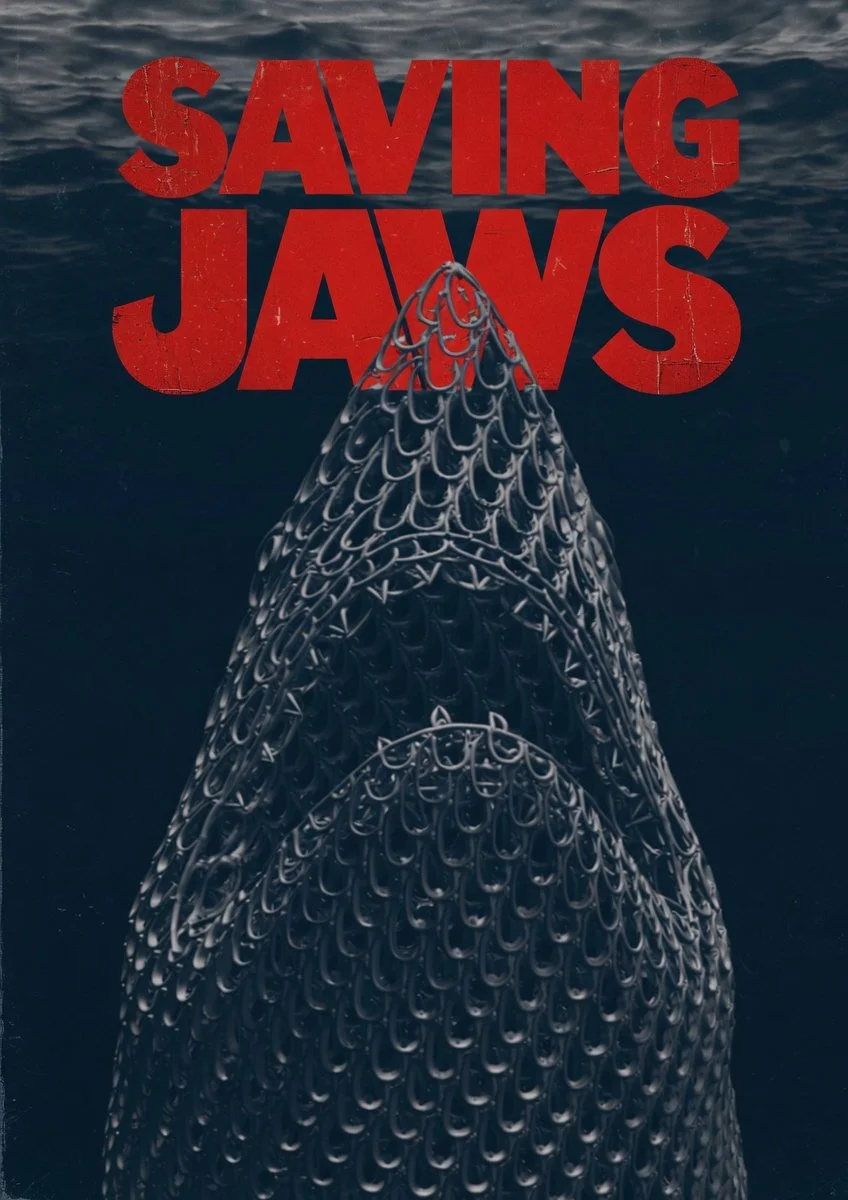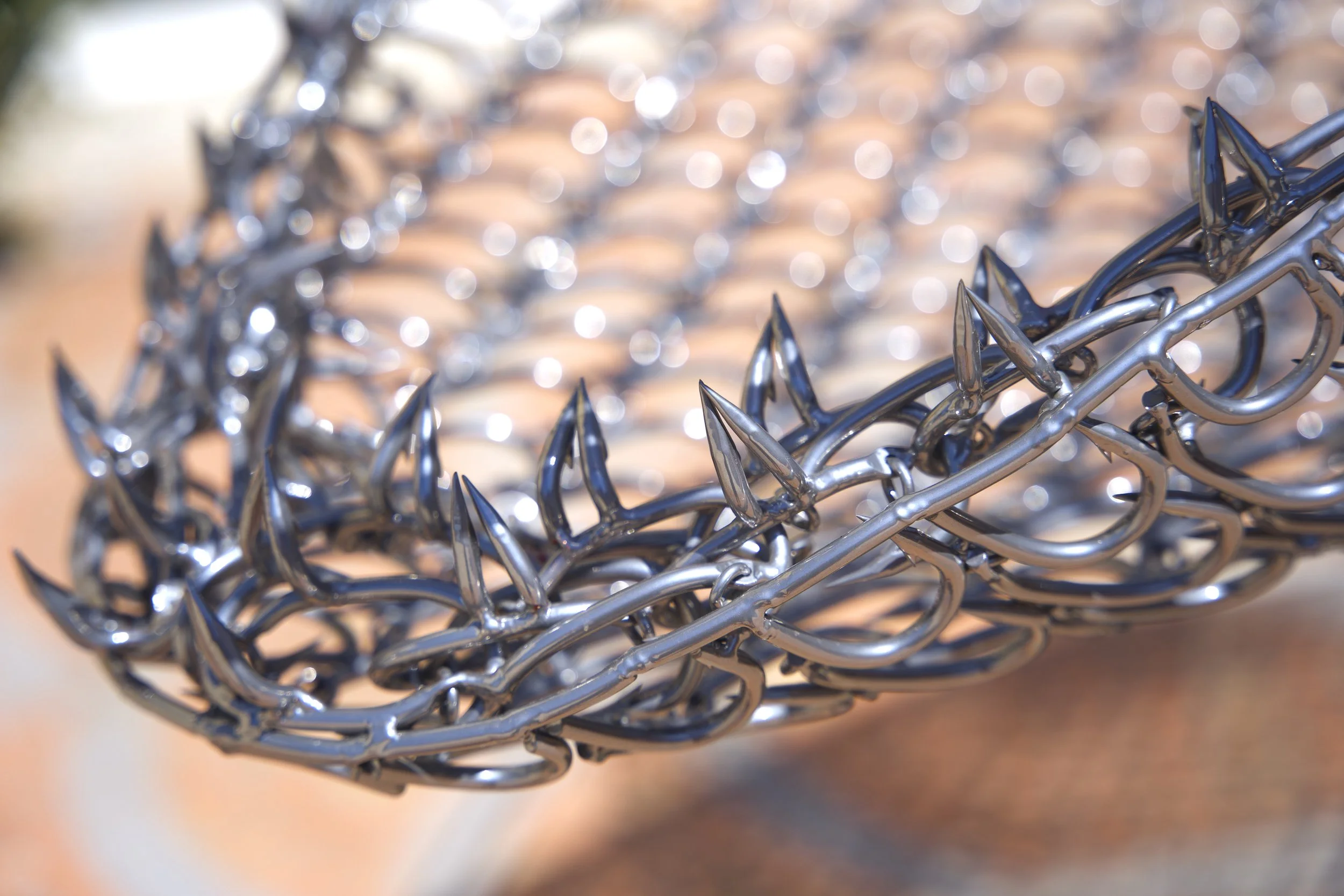
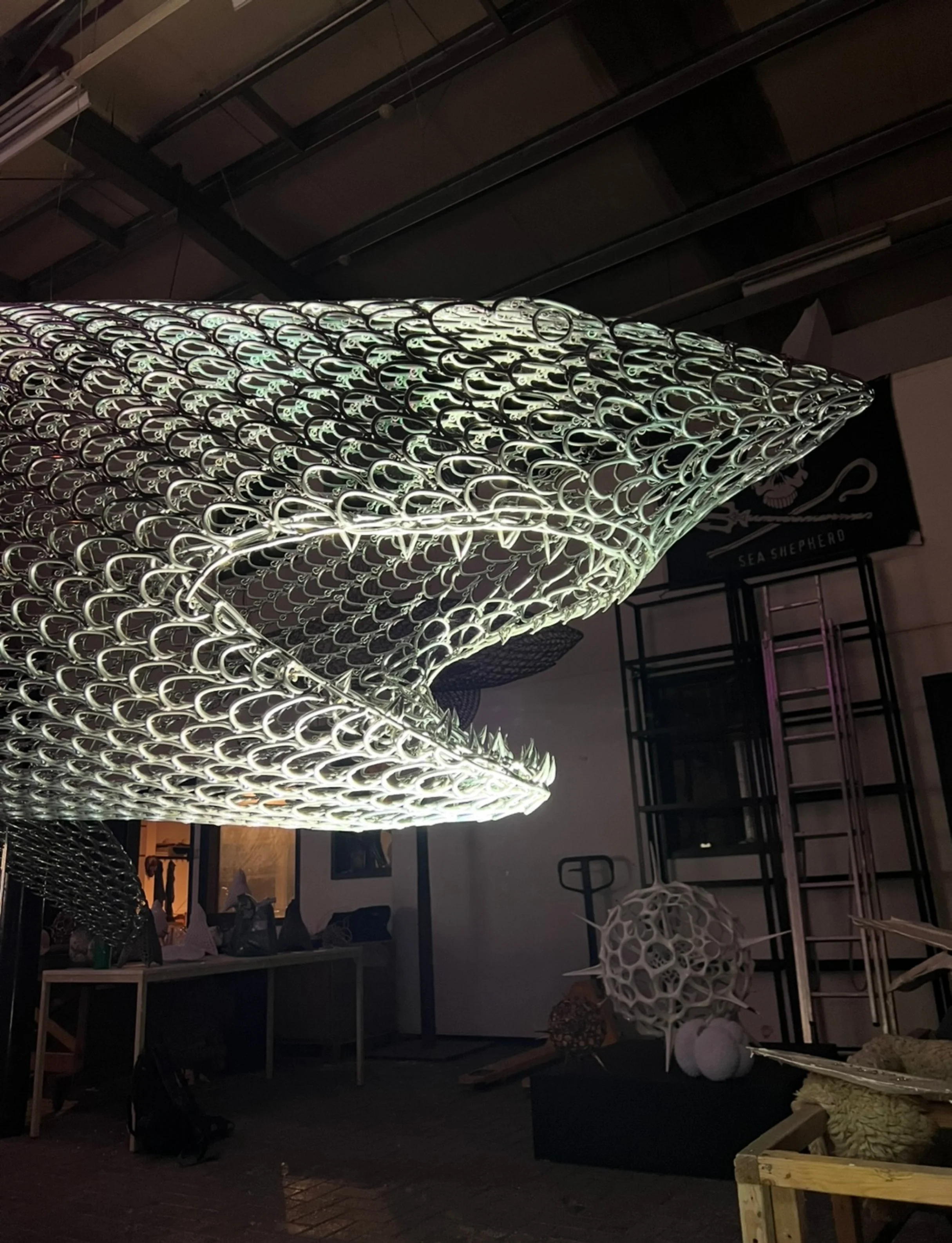
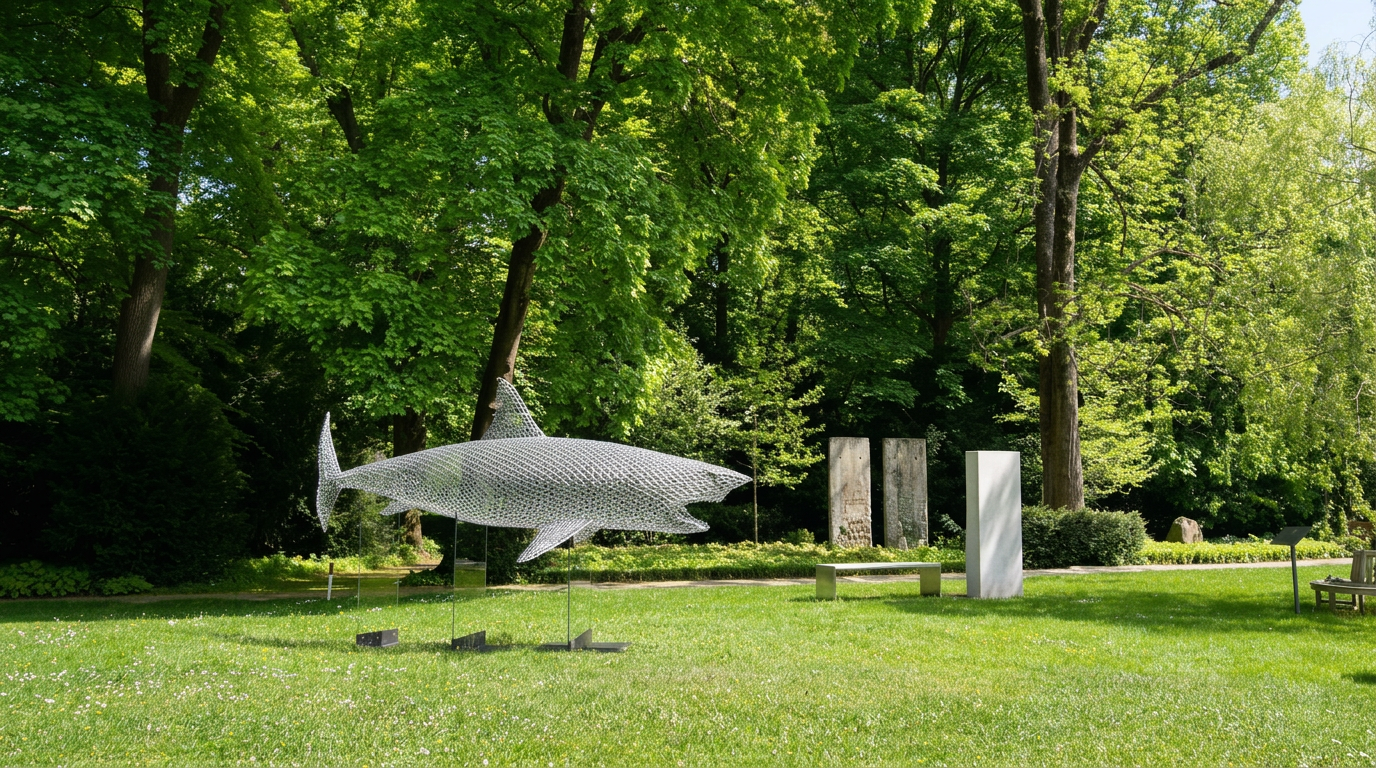
Saving Jaws is an ambitious art and conservation project by Vincent Mock, centred around a monumental sculpture of a great white shark made from stainless steel fishing hooks.
The work continues Vincent’s long-standing practice of transforming objects associated with fishing and extraction into intricate sculptures of marine life. In Saving Jaws, that contradiction becomes the heart of the project: the material that represents a threat to life in the ocean is reshaped into one of its most powerful inhabitants.
But Saving Jaws is conceived as more than a sculpture.
The project explores how art can become a platform for collective participation, bringing together contemporary art, marine conservation and new forms of digital ownership. Rather than existing solely as an object to be acquired and held by a single collector, the artwork is being developed around the idea that many people can become connected to it, and to the cause it represents.
Saving Jaws
Art, conservation, and a new way of thinking about ownership.
At its simplest, Saving Jaws begins with an act of transformation.
A fishing hook becomes part of a shark.
An object associated with taking from the ocean becomes part of a work intended to protect it.
And an artwork traditionally owned by one becomes an experiment in what might be possible when ownership, participation and responsibility are shared.
Saving Jaws asks a simple question: can we create value around nature not by extracting from it, but by recognising how much it is worth while it is still alive?
The Vision
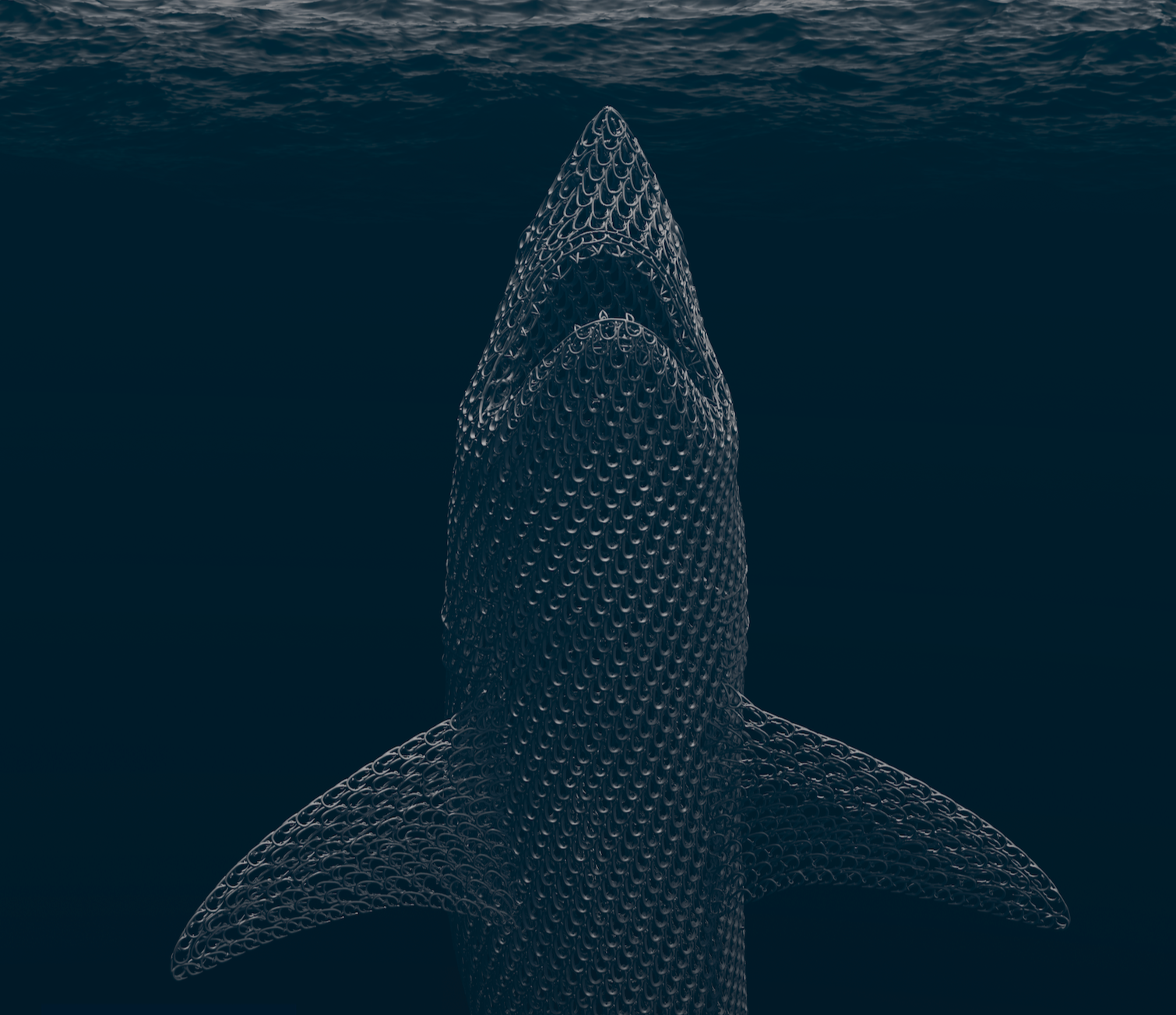
A great white shark appears suspended in space, its body formed from thousands of gleaming fishing hooks.
From a distance, the sculpture has the presence and elegance of the animal itself. Up close, the material tells another story. Every hook carries a tension between beauty and violence, human ingenuity and ecological consequence.
The great white shark is one of the ocean’s most recognisable predators, but also one of its most misunderstood. As an apex predator, it forms part of the complex balance that allows marine ecosystems to function.
Saving Jaws asks us to reconsider the way we look at these animals, and ultimately the way we value the natural world.
For Vincent, that question extends beyond conservation and into the way society thinks about value itself. Artworks are routinely assigned extraordinary financial and cultural value, while the ecosystems on which human life depends are too often treated as expendable resources.
What happens when those two ideas of value are brought together?
The Artwork
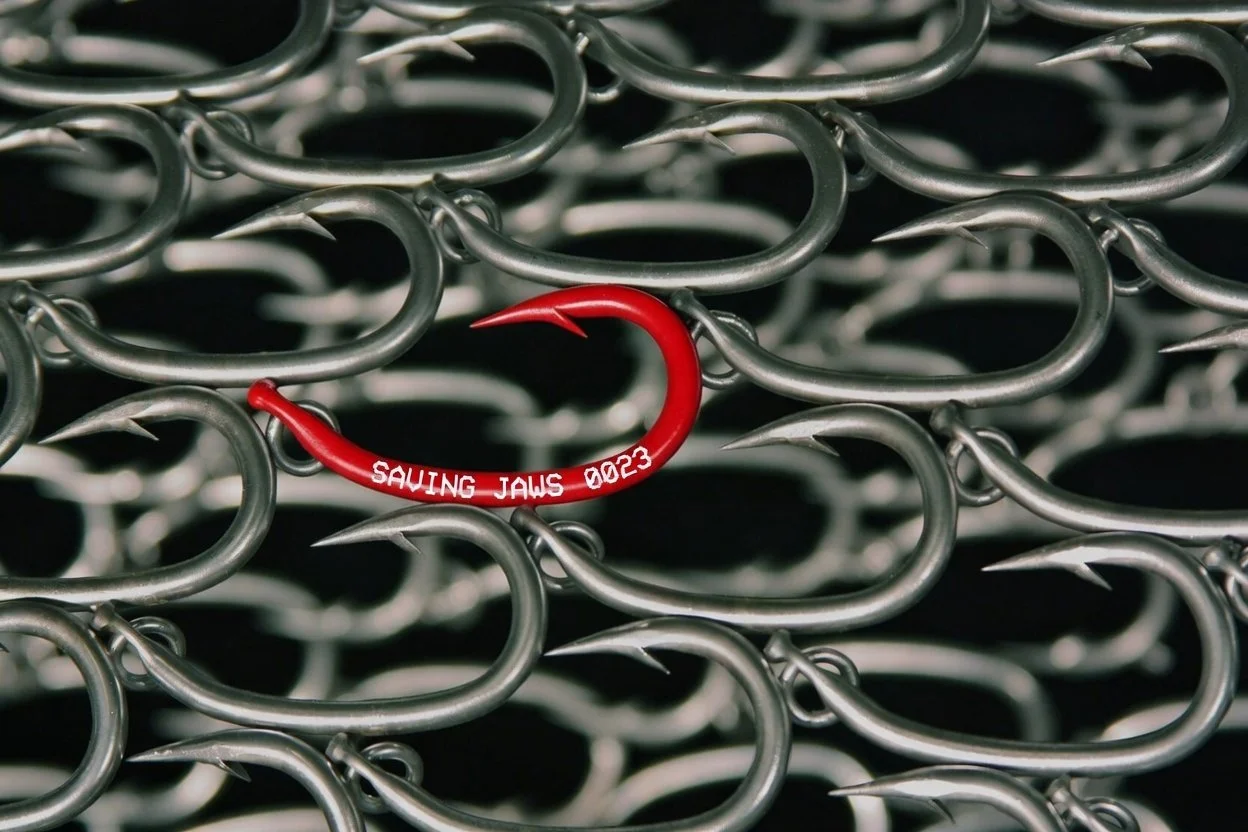
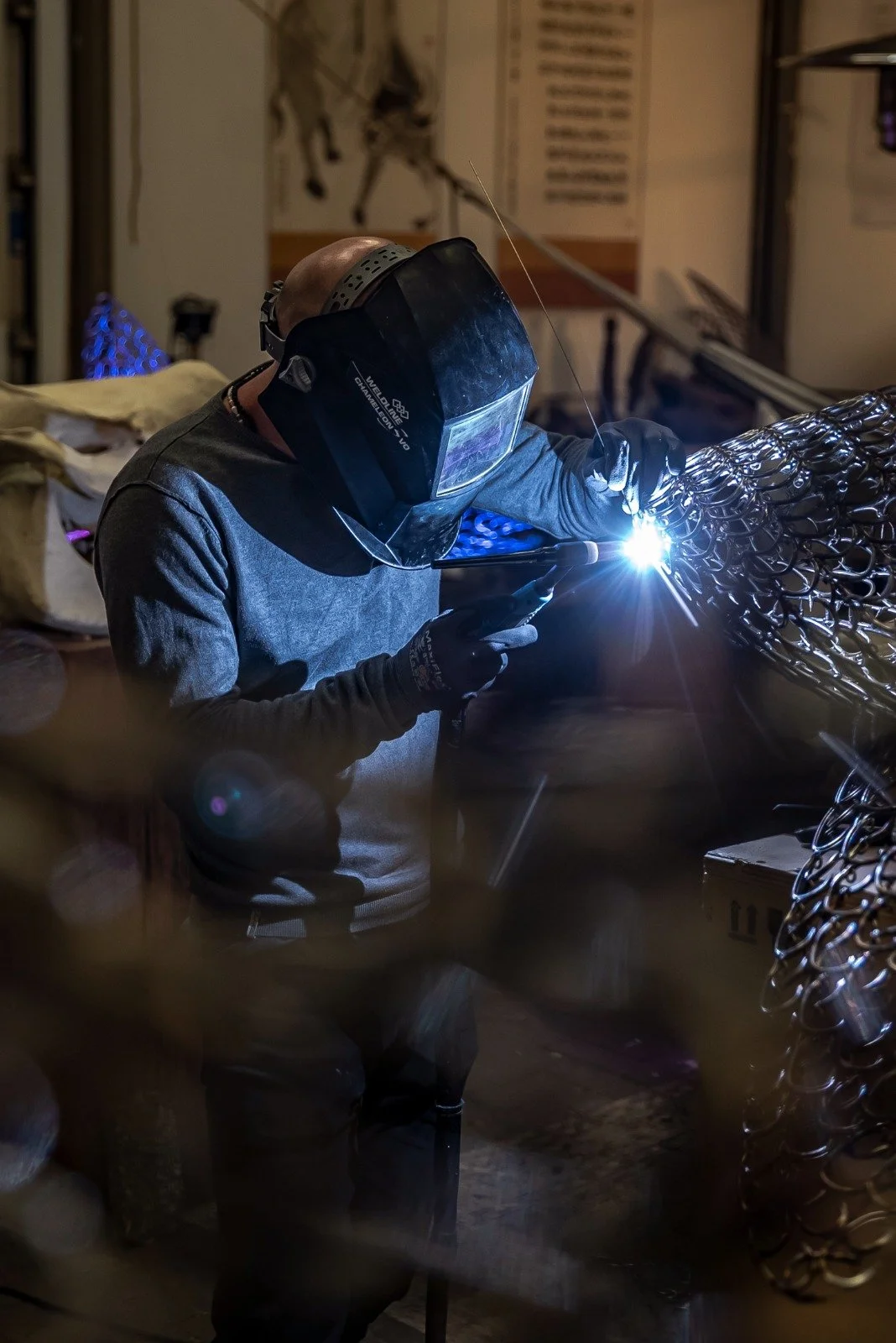
At the centre of Saving Jaws is a large-scale great white shark sculpture constructed from stainless steel fishing hooks.
The choice of material is fundamental to Vincent Mock’s work. Fishing hooks are functional objects designed to catch and remove life from the ocean. By assembling them into marine animals, Vincent reverses their meaning. Something associated with extraction becomes a means of looking more closely at what is being lost.
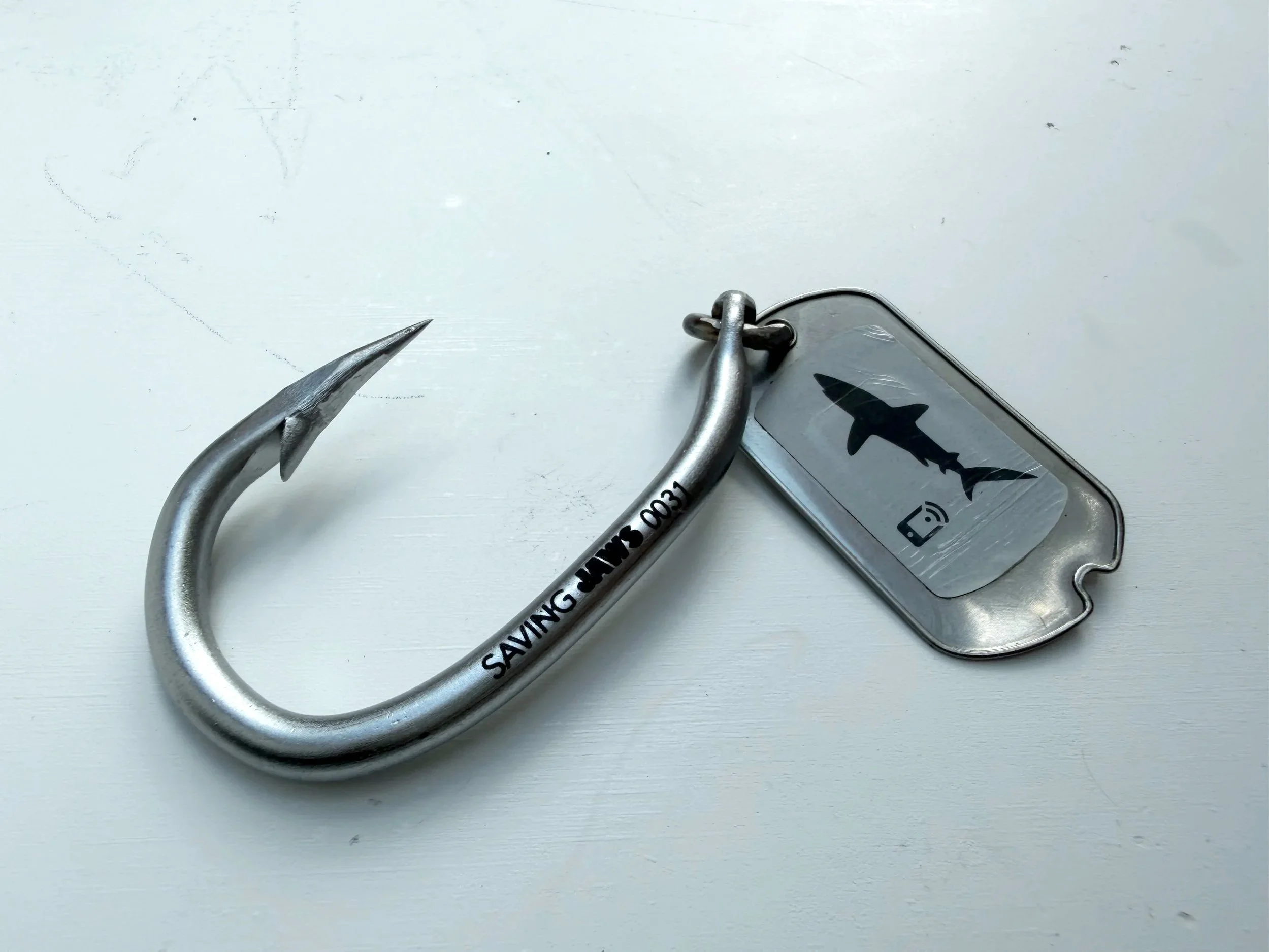
In Saving Jaws, the individual hook also becomes a symbol of participation.
The project is being developed around a shared ownership model in which individual parts of the sculpture can be digitally connected to participants around the world. Blockchain technology offers a way of recording and authenticating that relationship between the physical artwork and its wider community.
The technology is not the artwork itself. It is a tool that may allow a monumental physical sculpture to be experienced and owned in a different way.
Instead of belonging only to one person or institution, Saving Jaws imagines an artwork supported by a network of people connected through a shared interest in art, the ocean and its protection.
Art With a Wider Purpose
Marine conservation is embedded in the idea behind Saving Jaws.
The project is intended to use the visibility and reach of the artwork to support ocean protection and research, while opening conversations about sharks, marine ecosystems and humanity’s relationship with the natural world.
The final conservation partnerships and project structure will develop alongside the artwork, allowing Saving Jaws to connect artistic impact with meaningful work in the field.
This relationship works in both directions. Conservation gives the sculpture a purpose beyond the gallery, while art gives complex environmental questions a physical and emotional presence.
Statistics can describe what is happening to the ocean. Art can make us stop and look.
A Collective Artwork
Saving Jaws proposes a different relationship between artwork and audience.
Through its digital layer, people will be able to become connected to individual elements of the sculpture and, through them, to the larger work. Over time, this can create a community around the artwork rather than simply an audience standing in front of it.
The precise form of that participation will continue to evolve as the project develops.
What remains constant is the central idea: one sculpture made from many individual parts, connected to many individual people, around one shared living system.
Saving Jaws can exist physically through exhibitions and public presentations, while its digital dimension allows the project, its story and its community to extend beyond any single location.