
COLLECTION
HOOKED ON LIFE
Hooked on Life is a tribute to the last marine megafauna. The series draws attention to the rate at which our oceans are diminishing through life-sized sculptures of endangered marine animals. The thousands of longline fishing hooks used to create these spectacular sculptures are an ode to the last true monsters of the deep. In East Timor, fishhooks that date as far back as 42,000 years have been unearthed. These ancient tools, handcrafted from seashells, relate to a time when we were more in harmony with our natural environment.
These fishing hooks now serve as a symbol for humankind’s destruction of the marine environment. Every day, the fishing industry relentlessly deploys millions of longline fish hooks into the water to capture iconic wildlife to be sold as a mere commodity. Today’s challenge is to choose whether we aim to live in such a world or to be mesmerized by its remaining natural beauty.
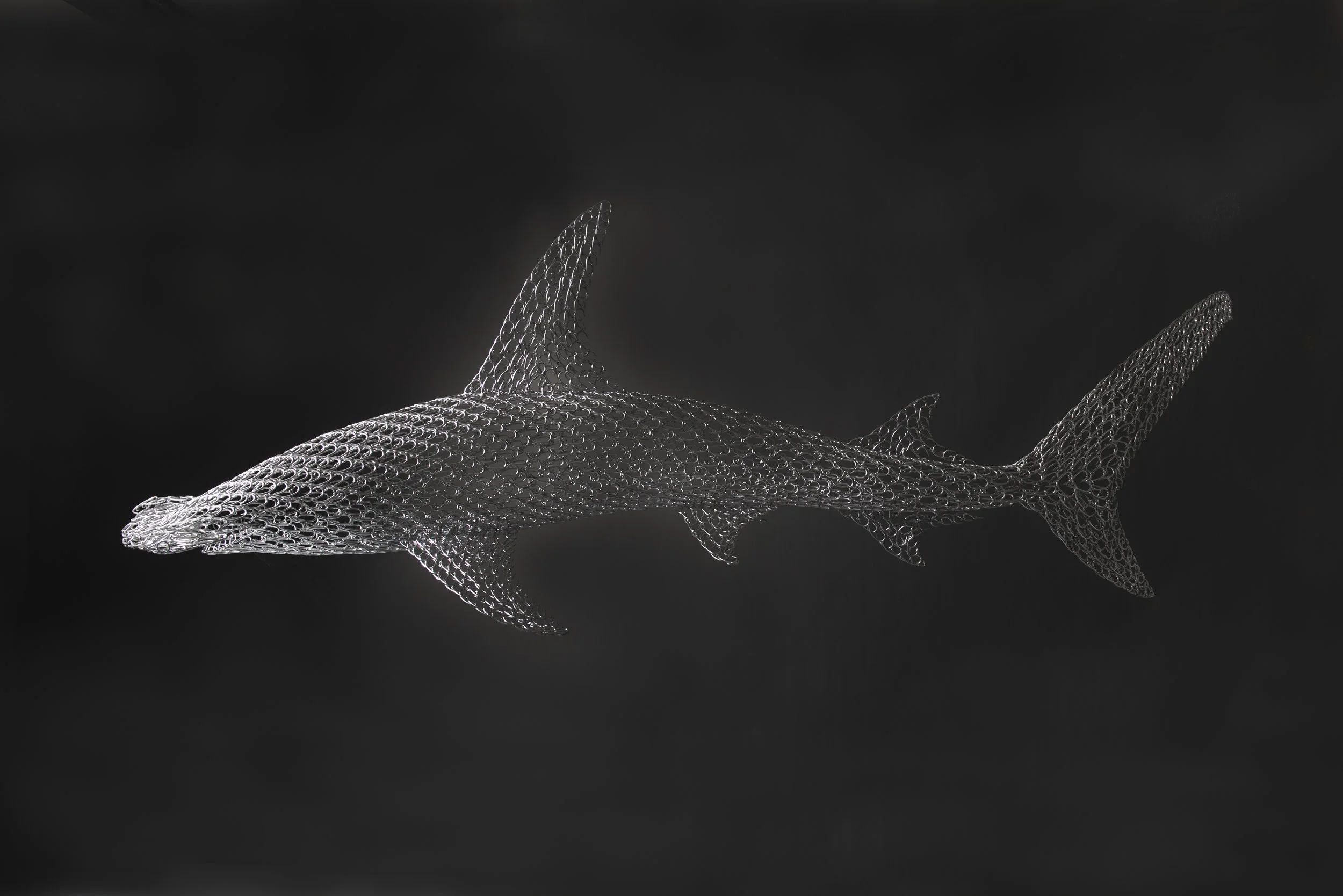
From a distance, the life-size shark, turtle, tuna, hammerhead, and manta ray sculptures appear to be featherlight, suspended in space as if free-floating weightlessly. Like real fish, they seem to celebrate the open space as their ocean.
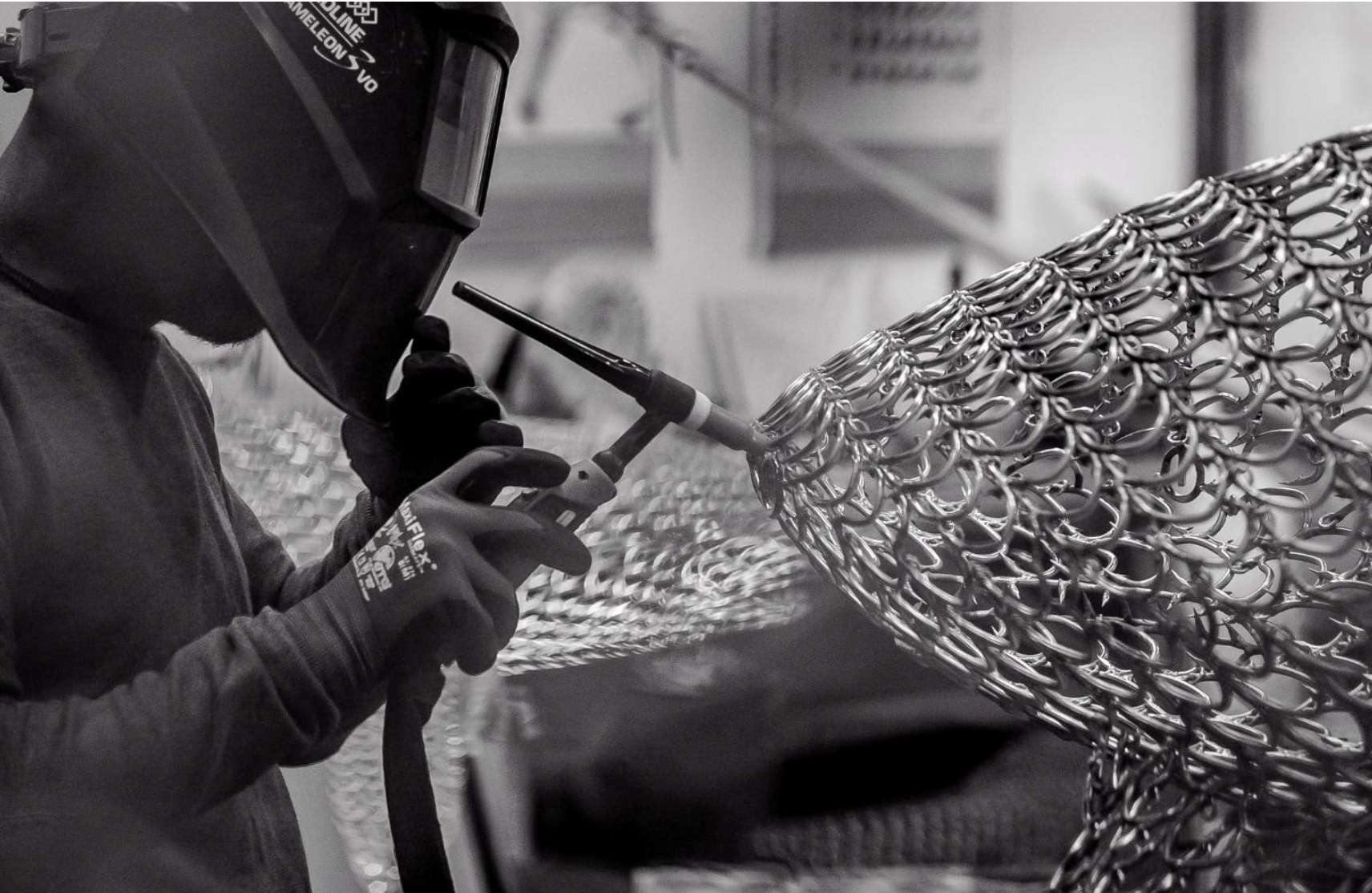
Made up of thousands of razor-sharp stainless steel fishhooks which have laboriously been put together, these complex creatures can actually weigh hundreds of kilos. The deadly hooks that the fishing industry so often uses to empty our oceans are so intricately welded together that they resemble schools of fish synchronously swimming through the air.
The sculptures are meant to remind us of a sense of unity by transforming man’s destructive tools and intentions into something beautiful. Through his art, Vincent Mock intends to draw attention to the dangers our marine wildlife is exposed to by capturing both sides involved. Rather than spreading a negative narrative on the issue, Mock aims to inspire our modern era by showcasing the beauty of nature and evoking a feeling of oneness.
Dusky Shark

Whale Shark
Great White
Yellowfin Tuna
Leatherback Turtle
Mako Shark
Great Hammerhead Shark
Scalloped Hammerhead Shark
Manta Ray
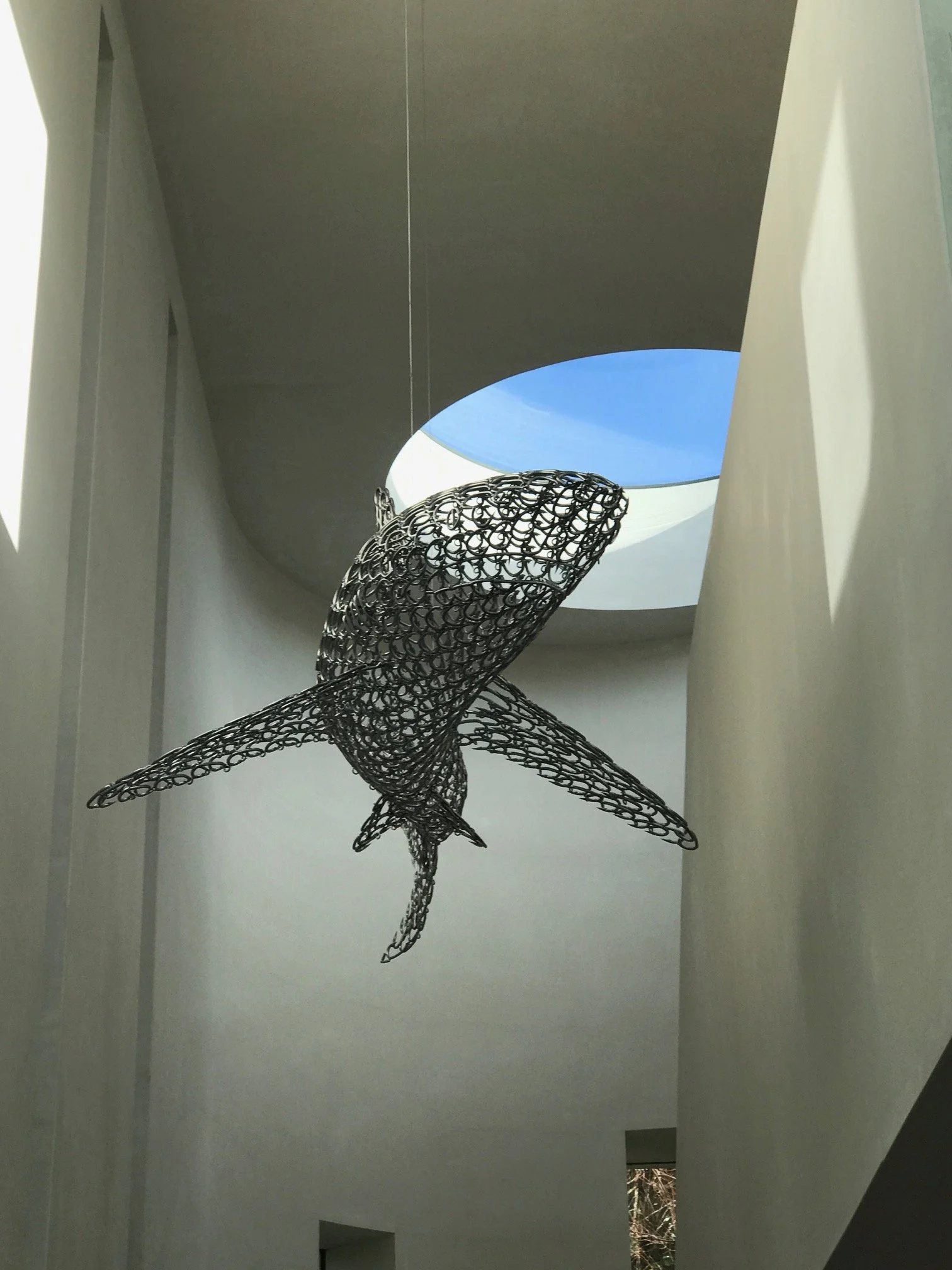
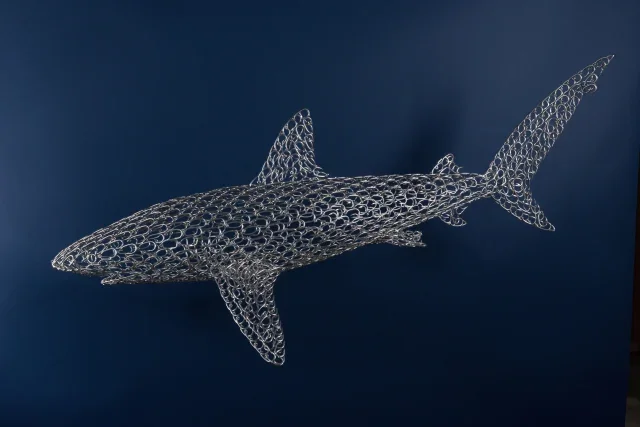
200 × 92 × 66 cm · approx. 1200 stainless steel longline fishhooks
We have chosen the dusky shark for its elegant, slender body shape — a silhouette that carries both strength and grace. Dusky sharks inhabit tropical and temperate oceans worldwide and are capable of remarkable migrations, traveling more than 3500 km in a single season in search of prey. With lifespans that can reach up to fifty years and a slow reproductive rate, they are especially vulnerable to overfishing.
Commercial and recreational fishing for dusky sharks in the western Atlantic and Gulf of Mexico was banned in 2000. Despite this, many individuals are still unintentionally caught on longlines and other fishing gear, often with high mortality rates. In other parts of the world, dusky sharks continue to be targeted for the shark fin trade, with devastating consequences for their populations.
This sculpture pays tribute to these magnificent animals. Through art, we aim to tell an important story about our current relationship with the oceans and to raise awareness of the urgent challenges facing marine conservation worldwide.
The Dusky Shark
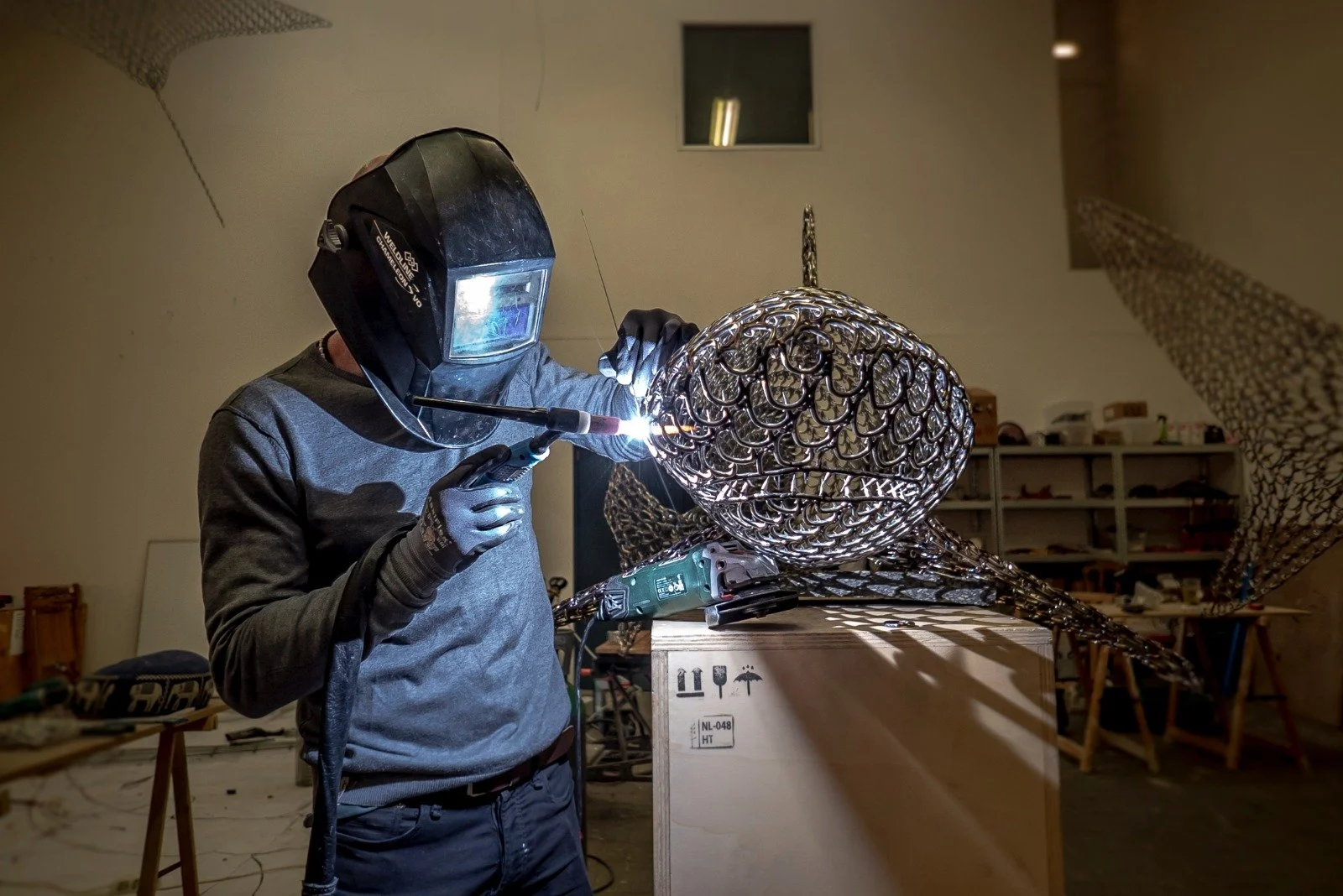
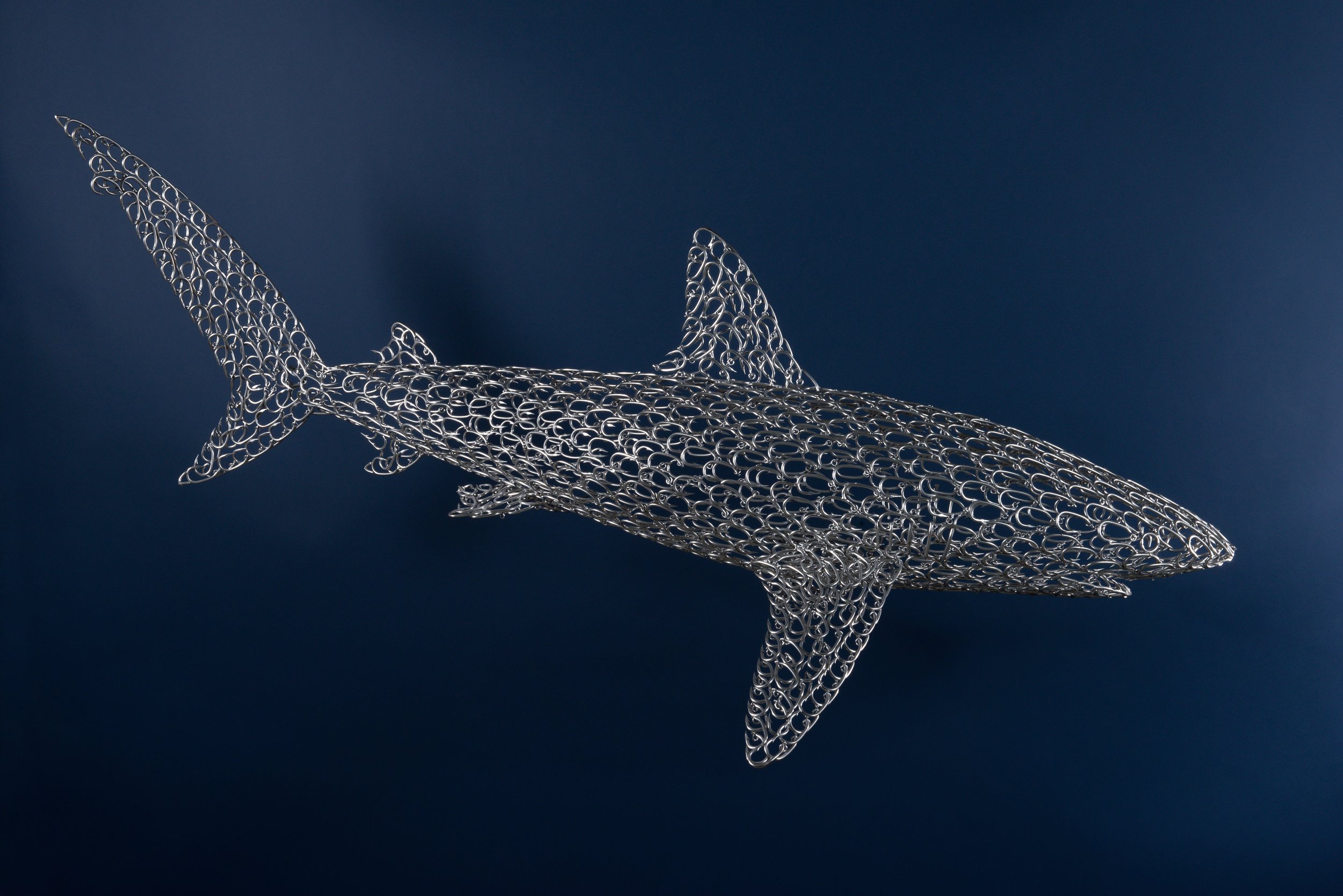
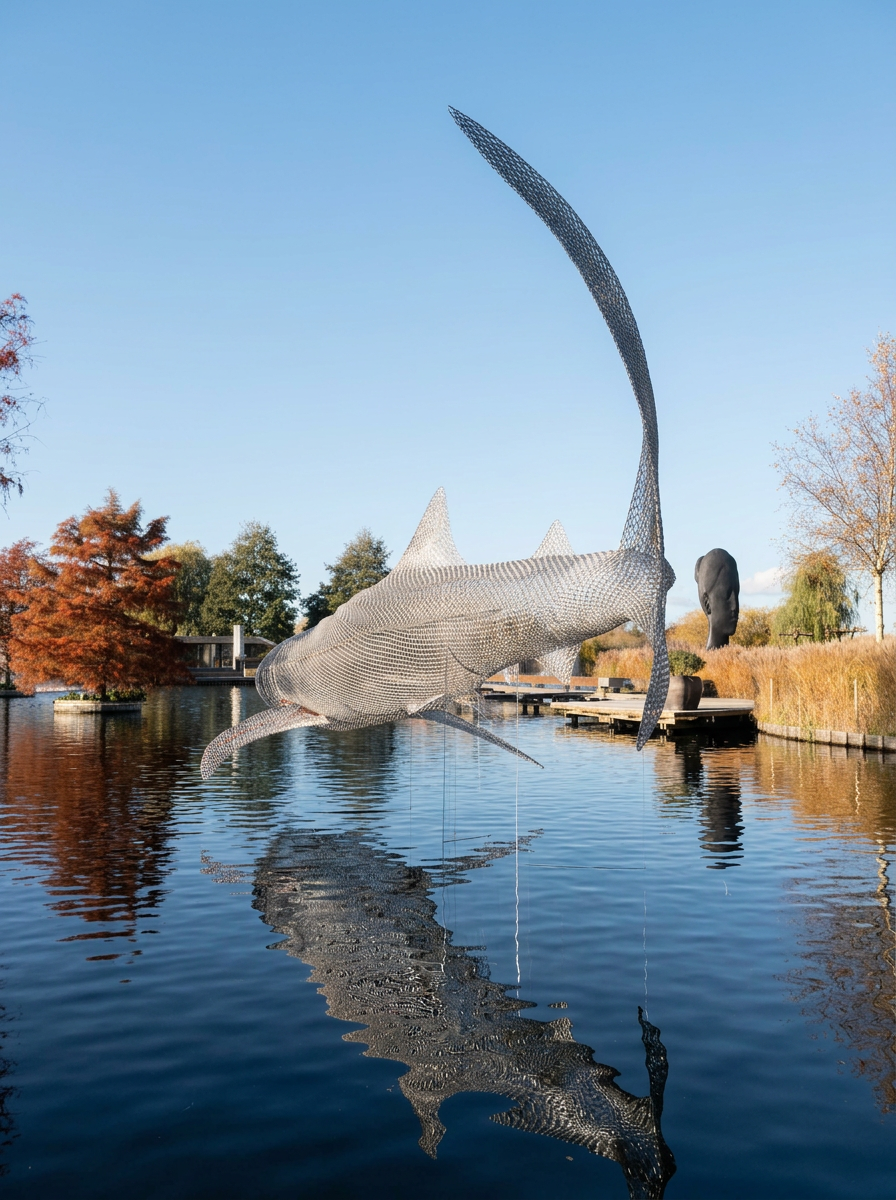
1200 × 450 × 400 cm · approx. 40000 stainless steel longline fishhooks
The whale shark is a marvel of scale and serenity. As the largest fish in the ocean, it can grow to extraordinary lengths, yet its immense size is paired with a gentle nature. Whale sharks feed by filtering vast volumes of water for plankton and tiny organisms, moving through tropical and warm temperate seas with slow, unhurried grace.
Despite their calm presence, whale sharks are increasingly affected by human activity. Collisions with vessels, entanglement in fishing gear, and the degradation of plankton-rich waters caused by climate change and pollution all pose serious threats. In some parts of the world, they are still targeted for their meat and fins, even as their populations remain vulnerable.
In this sculpture, Vincent Mock captures both the monumental scale and quiet dignity of the whale shark. Crafted from stainless steel longline fishhooks, the work reflects the tension between a creature shaped by ocean currents and the tools that symbolize human extraction. The shimmering surface echoes the movement of light underwater, transforming an ocean giant into a powerful reminder of the fragile balance between admiration and responsibility.
The Whale Shark
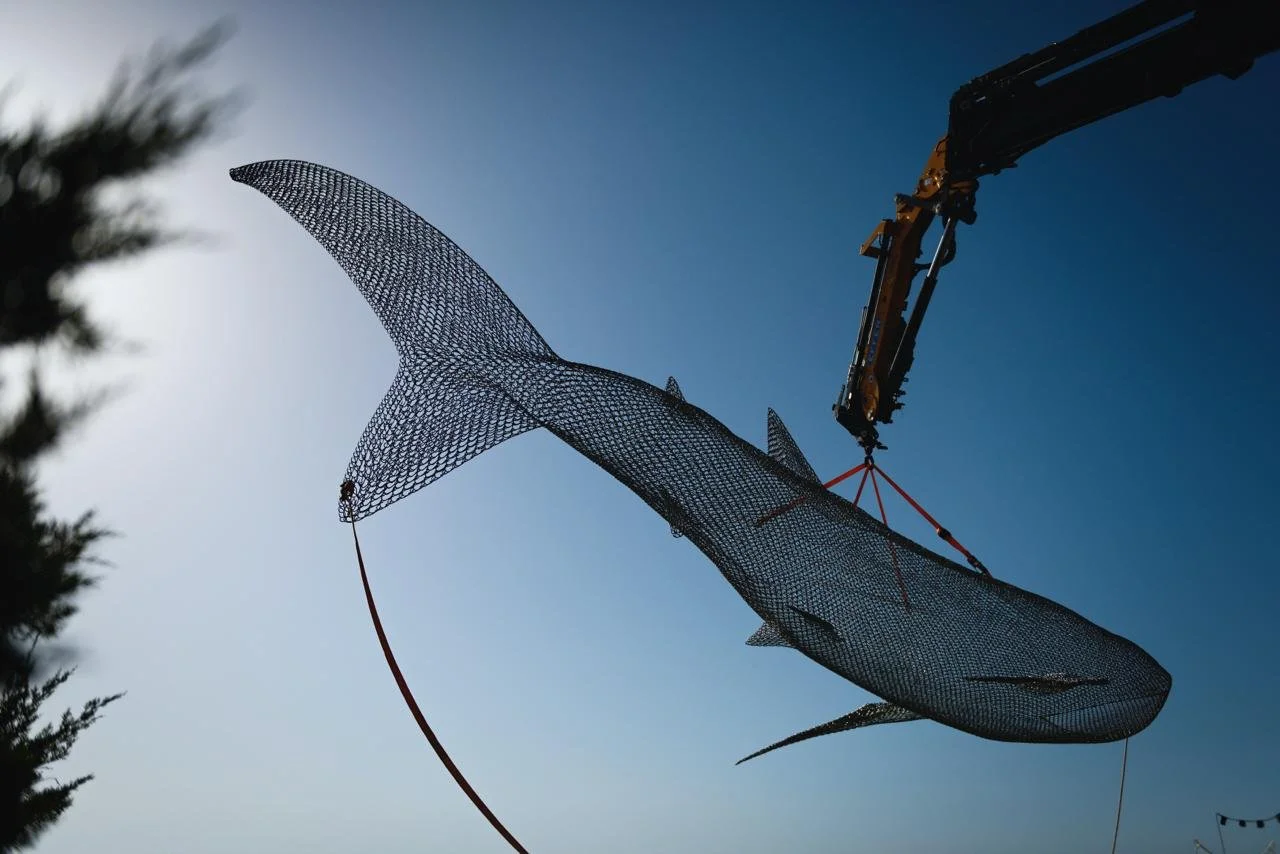
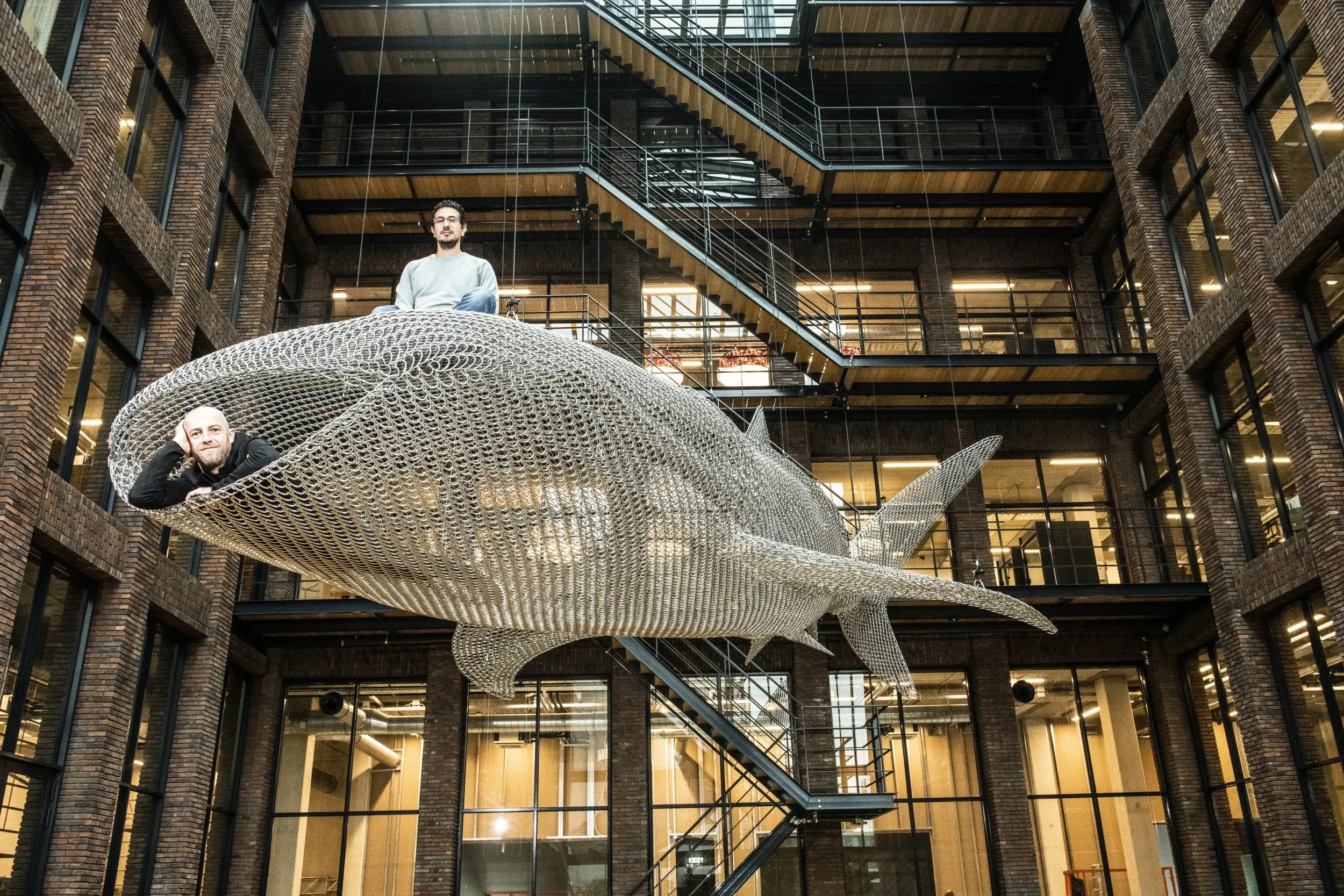
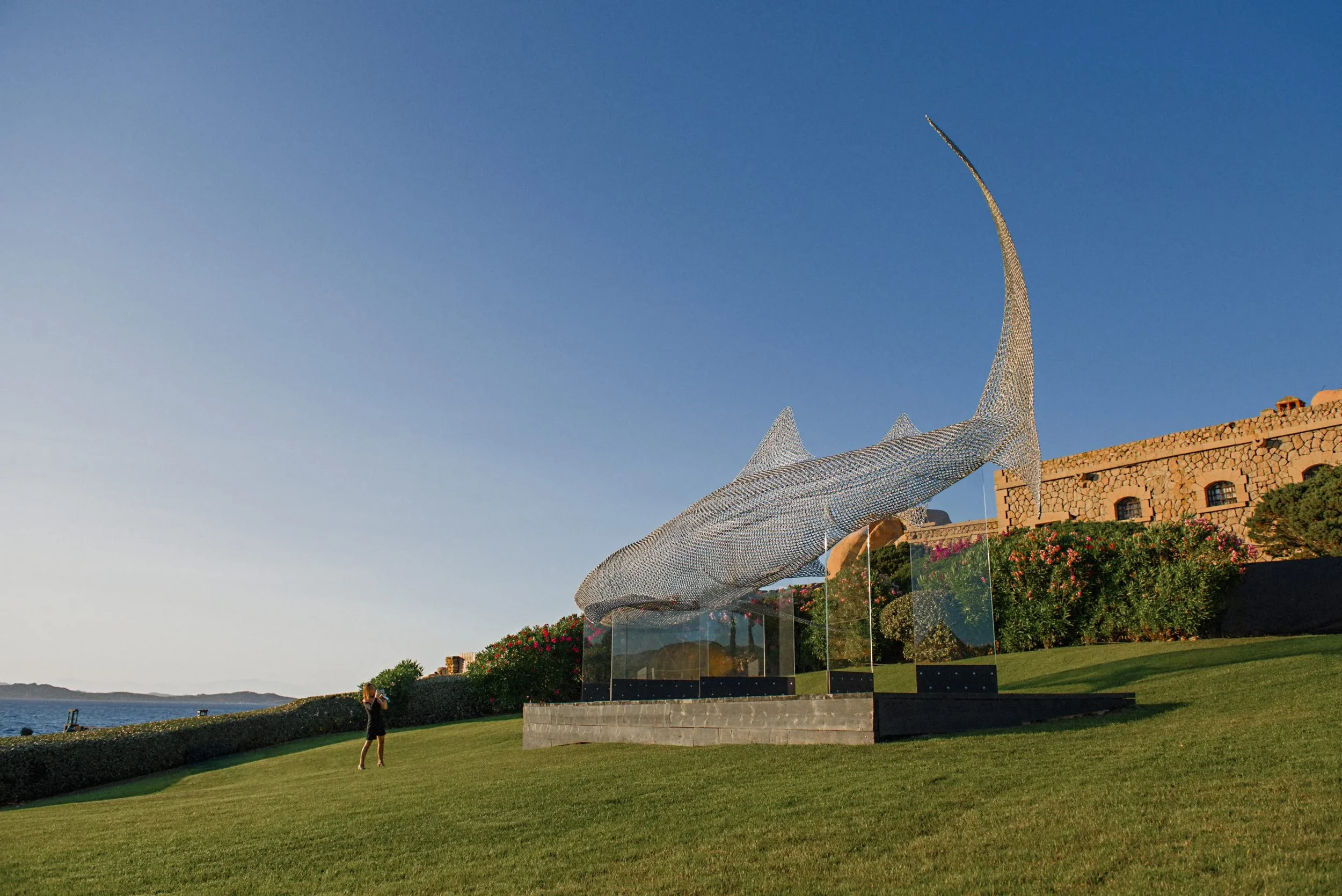
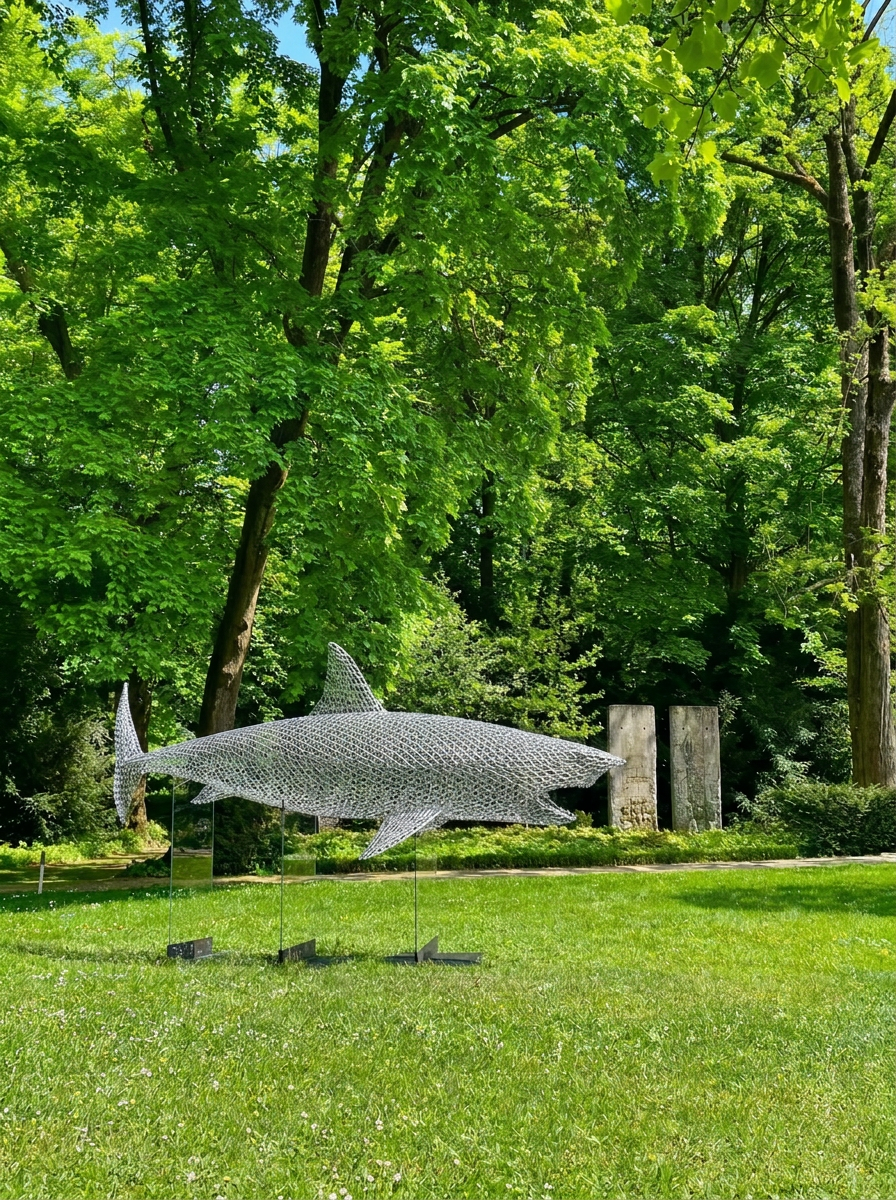
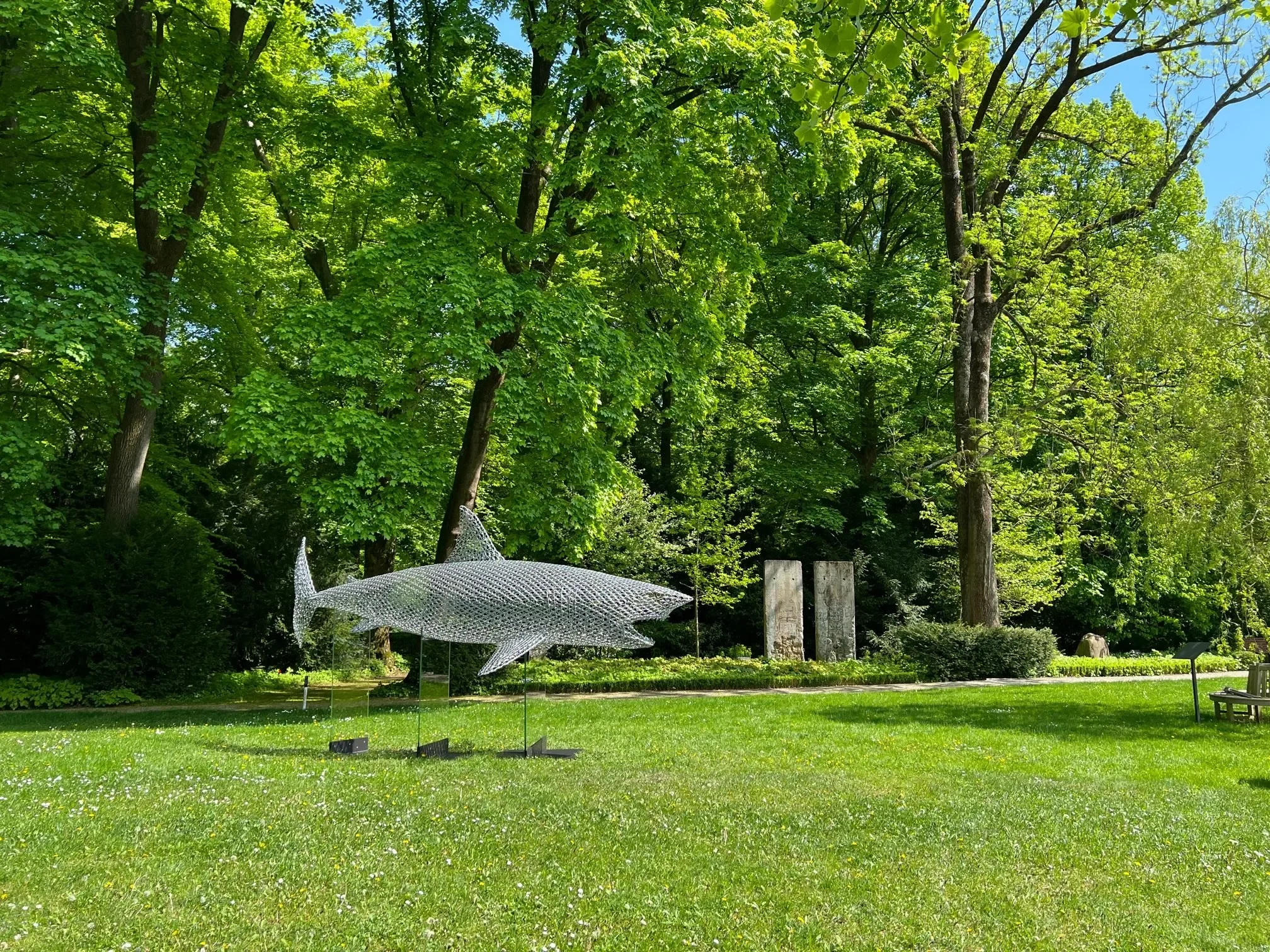
600 cm · approx. 5000 stainless steel longline fishhooks
The great white shark is one of the ocean’s most powerful and misunderstood species. As a keystone predator, it plays a vital role in maintaining balance within marine ecosystems. Its presence regulates food chains and supports biodiversity, yet fear and exploitation have long overshadowed its ecological importance.
Originally created as part of Vincent Mock’s Hooked On Life series, this life-sized great white shark sculpture is constructed from 5,000 stainless steel fishhooks. The hooks, traditionally tools of capture, are transformed into a shimmering, dynamic form that reflects both the strength of the animal and the tension inherent in humanity’s relationship with the sea. Beauty and threat exist side by side, mirroring the way we simultaneously admire and endanger this species.
This sculpture later evolved into Saving Jaws, the studio’s first NFT project and a collectively owned artwork. Each of the 5,000 fishhooks represents a single share in the piece, enabling 5,000 individuals worldwide to jointly own a fragment of the sculpture. Through blockchain technology, ownership becomes transparent and accessible, extending the artwork into a global digital space.
Saving Jaws transforms individual ownership into collective responsibility. Proceeds from the project support marine conservation initiatives and great white shark research, ensuring that the artwork contributes directly to the protection of the species it represents. What began as a sculptural reflection on human impact has become a living system of shared stewardship, where art, technology, and conservation converge.
The Great White Shark
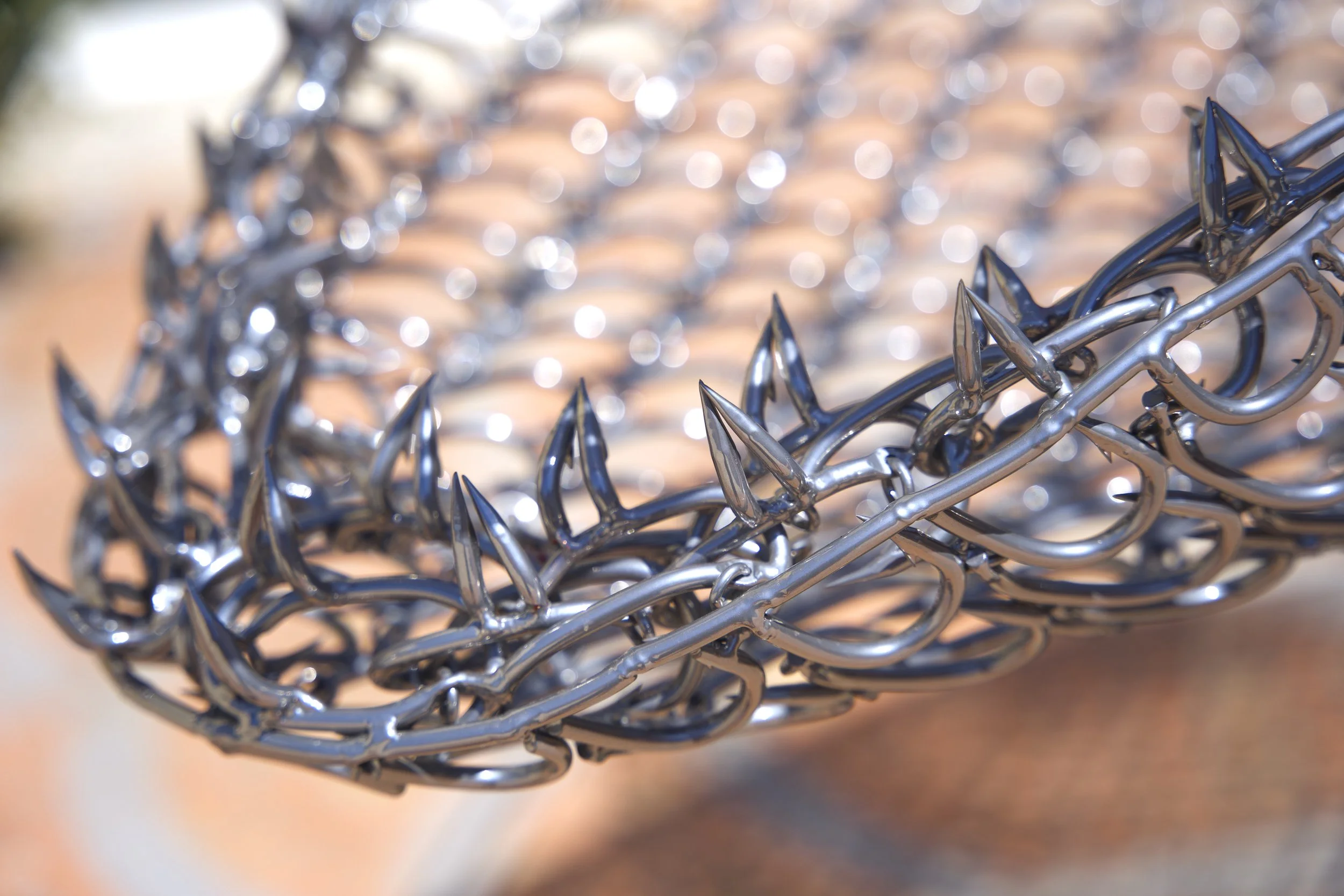
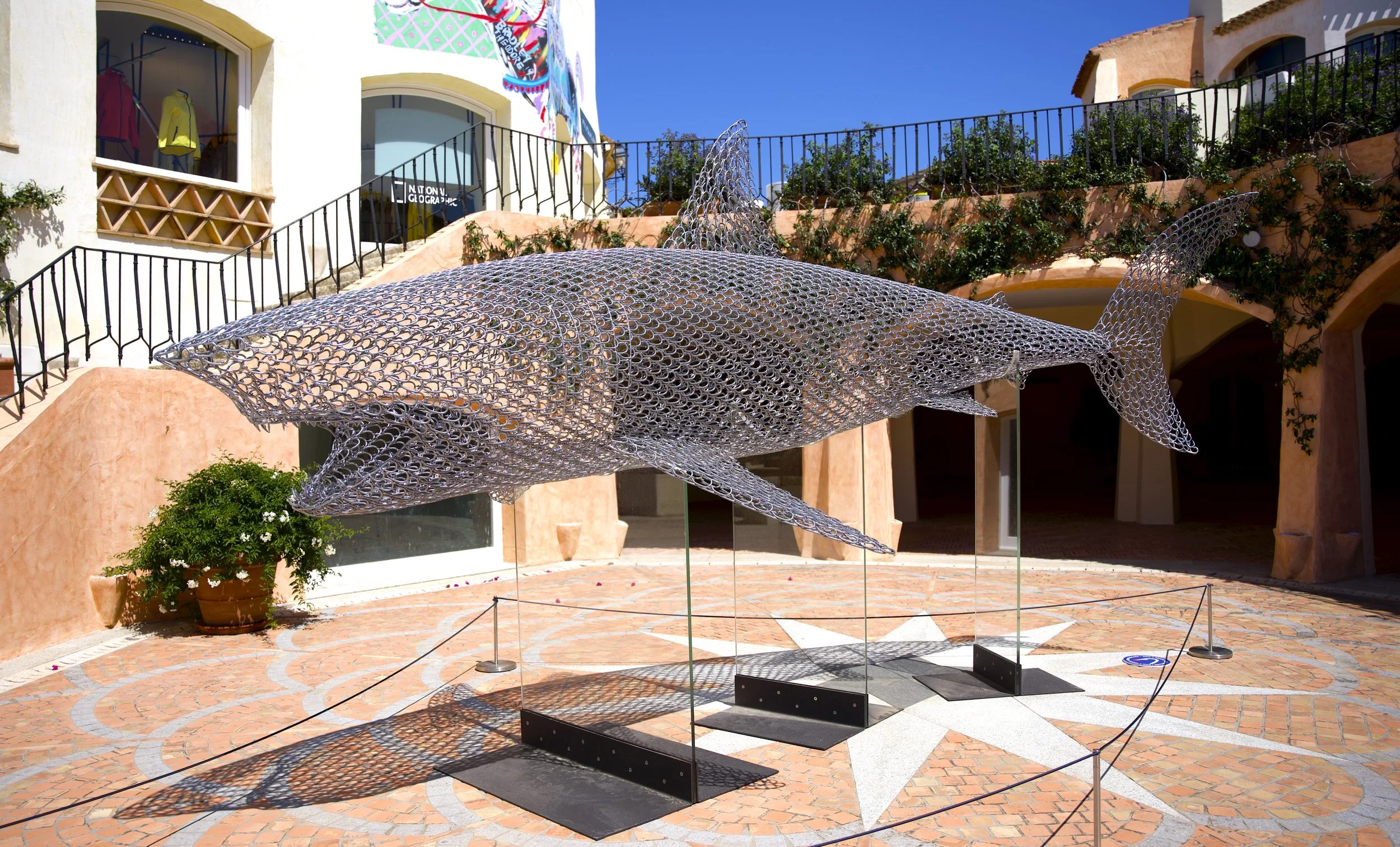
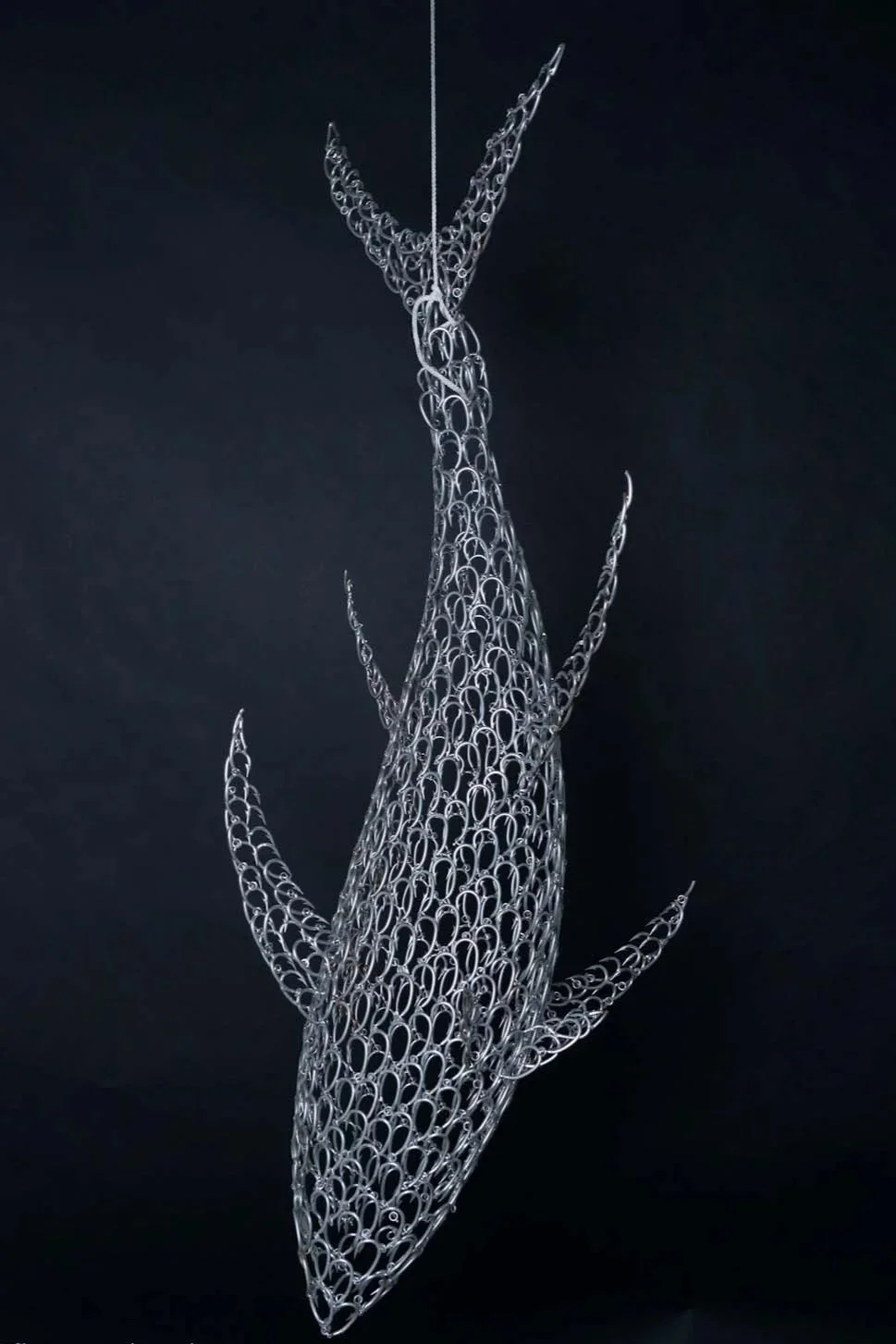
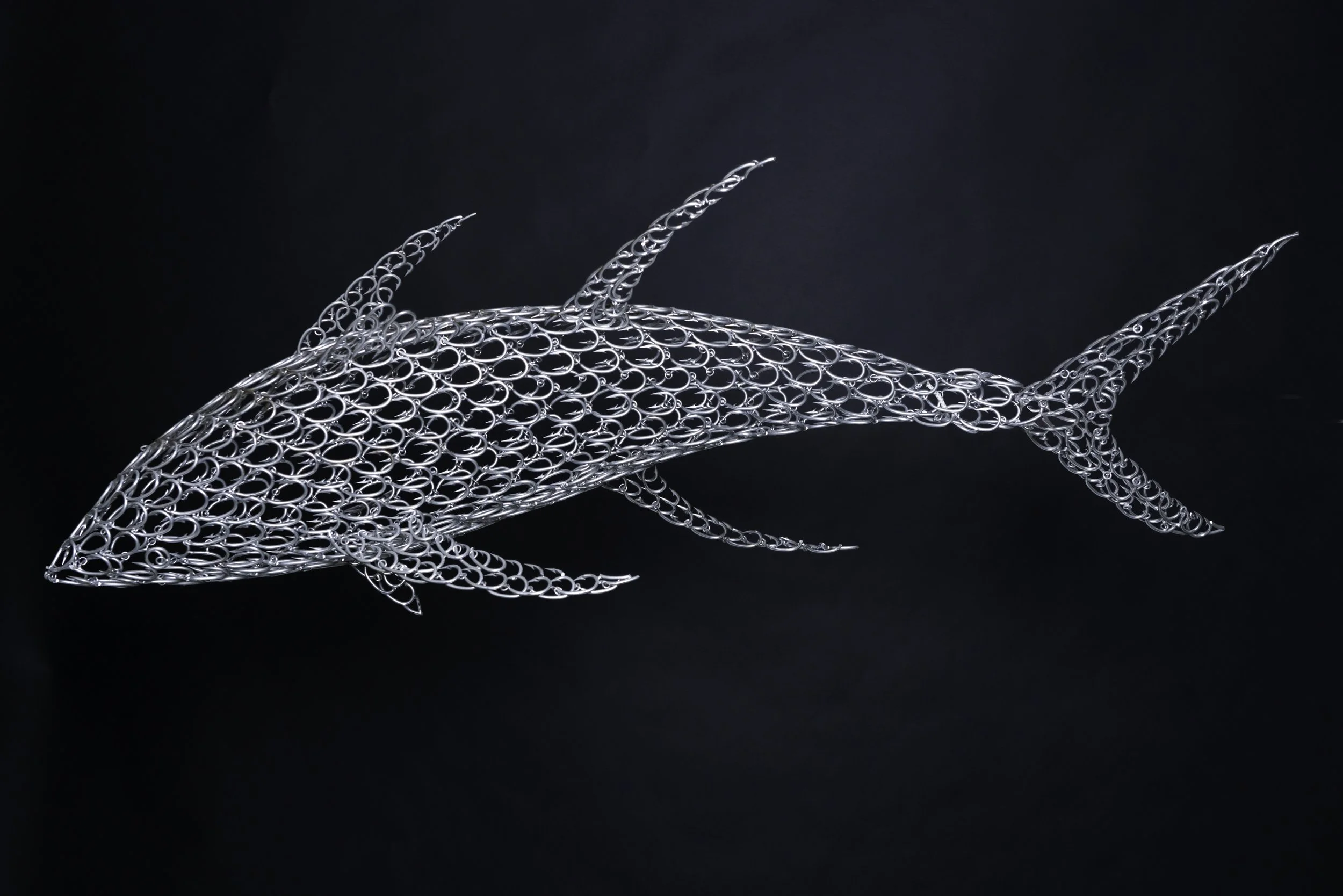
150 × 50 × 50 cm · approx. 600 stainless steel longline fishhooks
With this piece, Vincent Mock shapes a powerful marine predator from an unexpected and unsettling material: stainless steel longline fishhooks. The sculpture belongs to his Hooked On Life series, where the tools of fishing become both medium and message.
Each individual hook carries a layered history. Fishhooks are among humanity’s oldest technologies, with early examples dating back tens of thousands of years, once crafted from shell and bone and used in relative balance with the sea. Today, industrial longlining represents the opposite extreme: efficiency at scale, abundance at a cost. By assembling hundreds of these hooks into the fluid body of a tuna, Mock transforms an instrument of capture into a contemplative form.
At 150 cm in length, the sculpture appears suspended in motion, as if gliding through open water. Its shimmering surface is both alluring and uneasy, inviting viewers closer before revealing the sharp reality embedded within. Beauty and danger coexist, echoing the fragile relationship between humans and marine life.
Yellowfin Tuna is not a literal depiction of a fish, but a reflection on exploitation, responsibility, and coexistence. It asks the viewer to consider what lies beneath the surface of our consumption habits and whether admiration alone is enough to ensure the survival of the ocean’s most iconic species.
The Yellowfin Tuna

220 × 180 × 50 cm · approx. 2500 stainless steel longline fishhooks
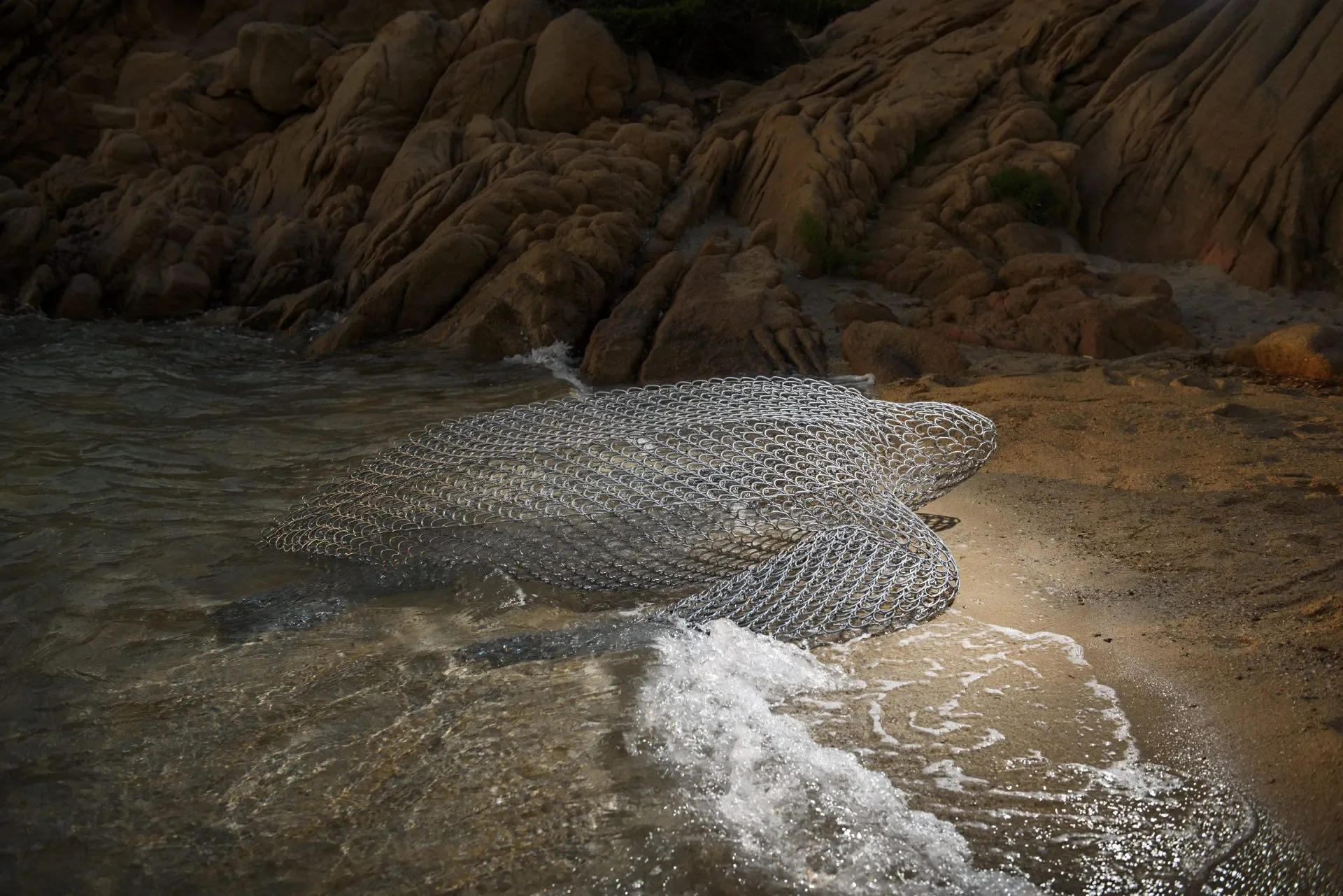
The leatherback turtle is one of the ocean’s most extraordinary survivors. With the most hydrodynamic body design of any sea turtle, its large, teardrop-shaped form is built for long-distance travel. It is the largest sea turtle on Earth, reaching up to 220 cm in length and weighing as much as 700 kg. Leatherbacks migrate across entire oceans in search of food and nesting grounds, crossing tropical and temperate waters with remarkable endurance.
Unlike other sea turtles, the leatherback has no hard, bony shell. Instead, its carapace is covered by skin and a layer of oily flesh, a feature that makes the species instantly recognizable and gives it its name. This unusual anatomy, combined with its sheer scale and graceful movement, makes the leatherback both unique and visually striking.
Despite its strength and evolutionary resilience, the leatherback turtle is critically endangered in many parts of the world. One of the most devastating threats comes from plastic pollution. Leatherbacks feed primarily on jellyfish, which in the water are easily mistaken for floating plastic bags. Ingesting plastic often proves fatal, turning a global waste problem into a direct danger for the species.
We chose to include the leatherback turtle in this installation because of its exceptional nature and the urgent story it carries. Constructed from approximately 2,500 TIG-welded stainless steel longline fishhooks, the sculpture transforms instruments of harm into a powerful tribute. Through this work, art becomes a means to reflect on human impact and to give presence to a species that urgently needs protection.
The Leatherback Turtle
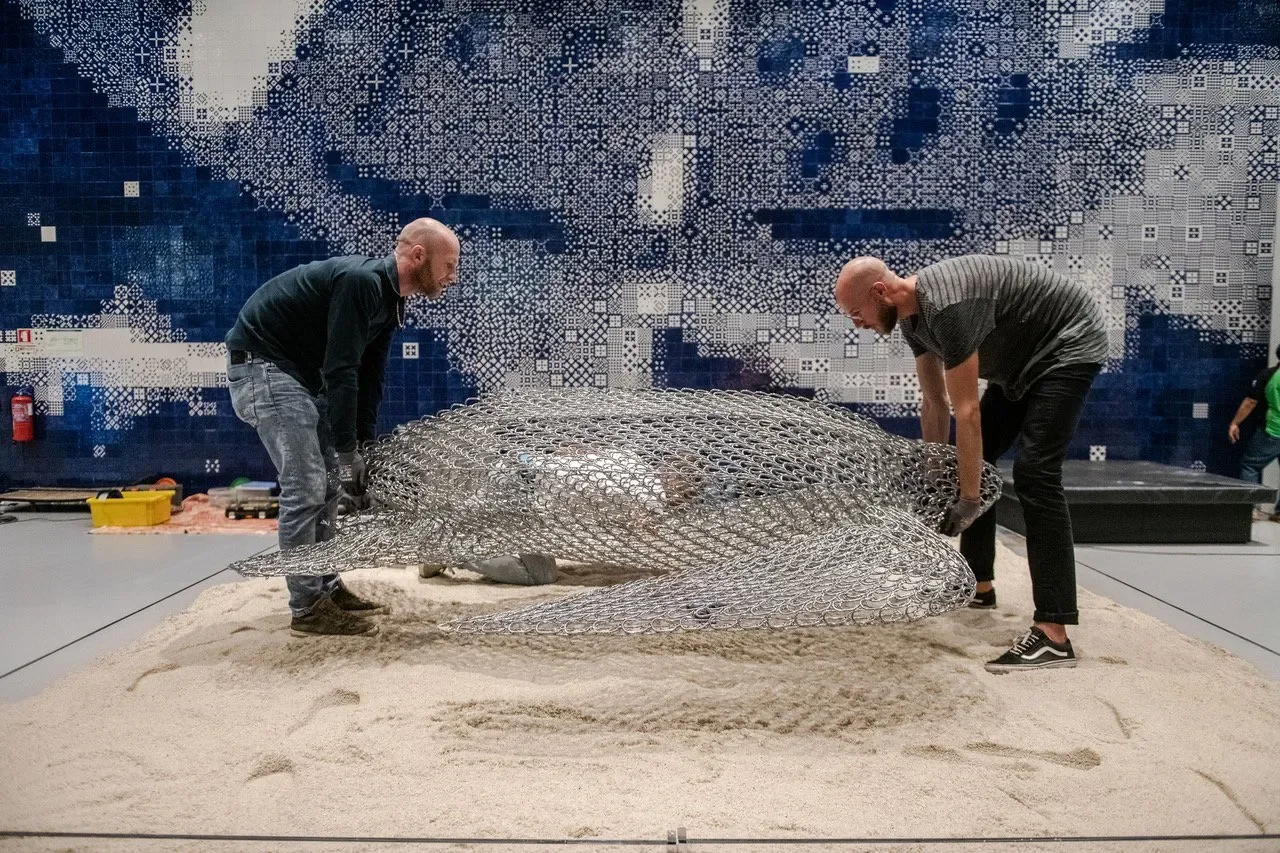
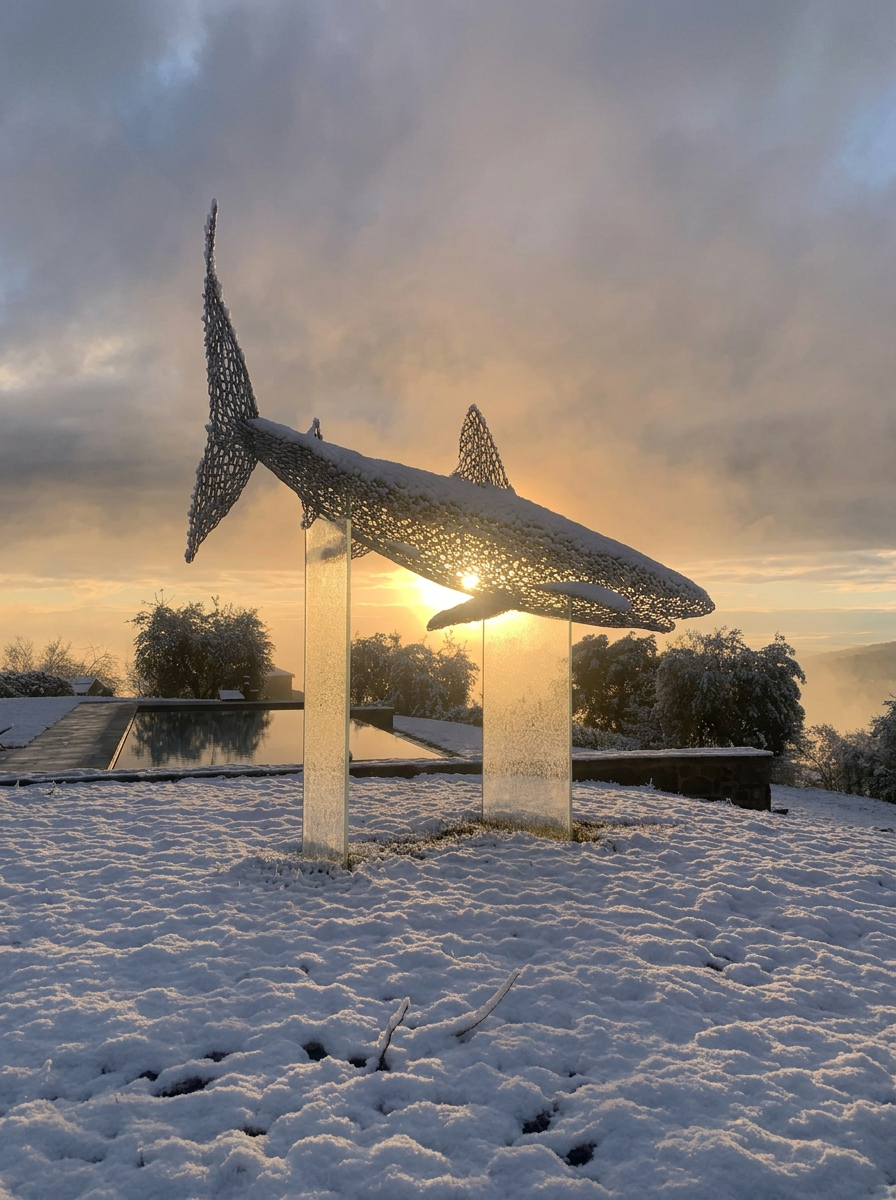
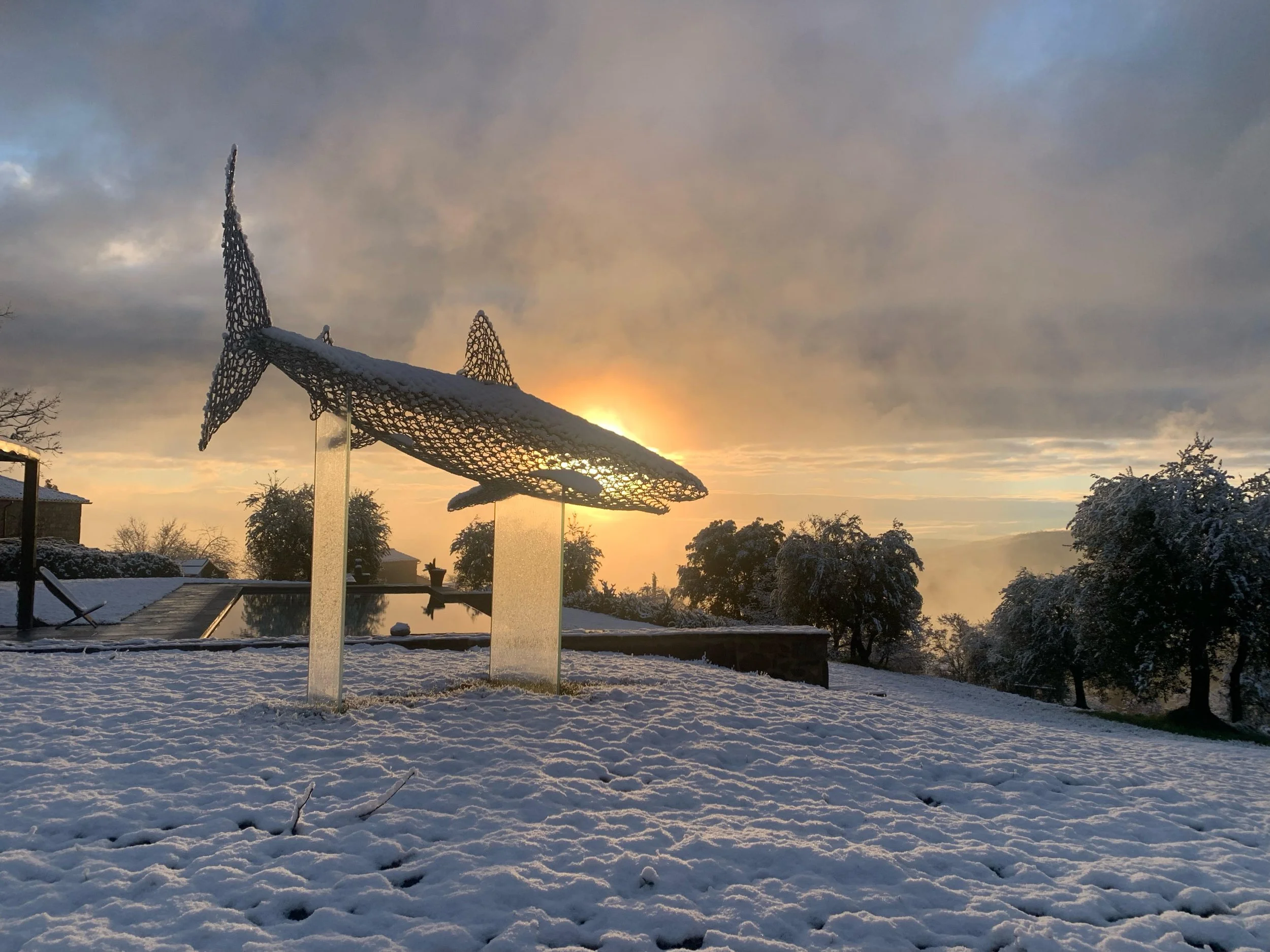
The mako shark holds a special place within Vincent Mock’s body of work. It was the very first sculpture he ever created, welded entirely from fishhooks, and the starting point of what would later become the Hooked On Life series. The piece was born out of a deep fascination with these extraordinary deep sea predators.
Mako sharks have existed for more than 400 million years, making them virtually living dinosaurs. Perfectly evolved for speed and precision, they are among the fastest sharks in the ocean, embodying raw energy, elegance, and resilience. Their streamlined bodies and constant motion make them a powerful symbol of survival and adaptation.
The sculpture captures this primal force through a material charged with contradiction. Fishhooks, instruments designed to capture and control, are transformed into the sleek form of a mako shark, celebrating its power while quietly confronting humanity’s impact on marine life.
This first mako shark sculpture laid the foundation for the Hooked On Life series, which has since expanded to include numerous other marine species. The mako now exists in three sizes — 120 cm, 230 cm, and 300 cm — marking the evolution of an idea that began with a single shark and grew into an ongoing exploration of ocean life, vulnerability, and coexistence.
The Mako Shark Fleet
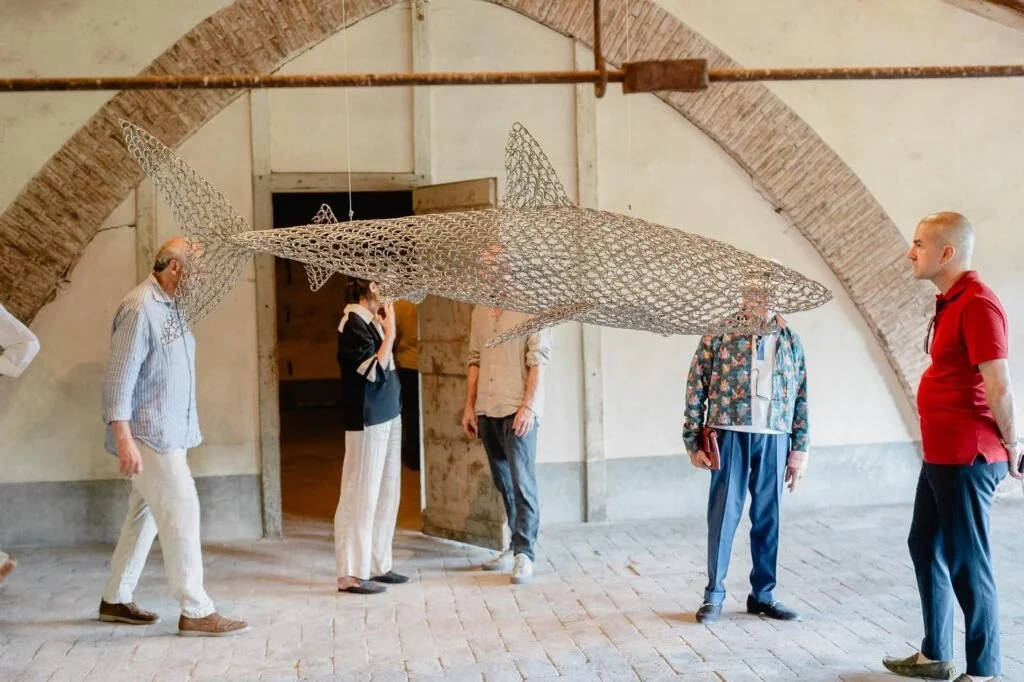
120 cm Mako Shark
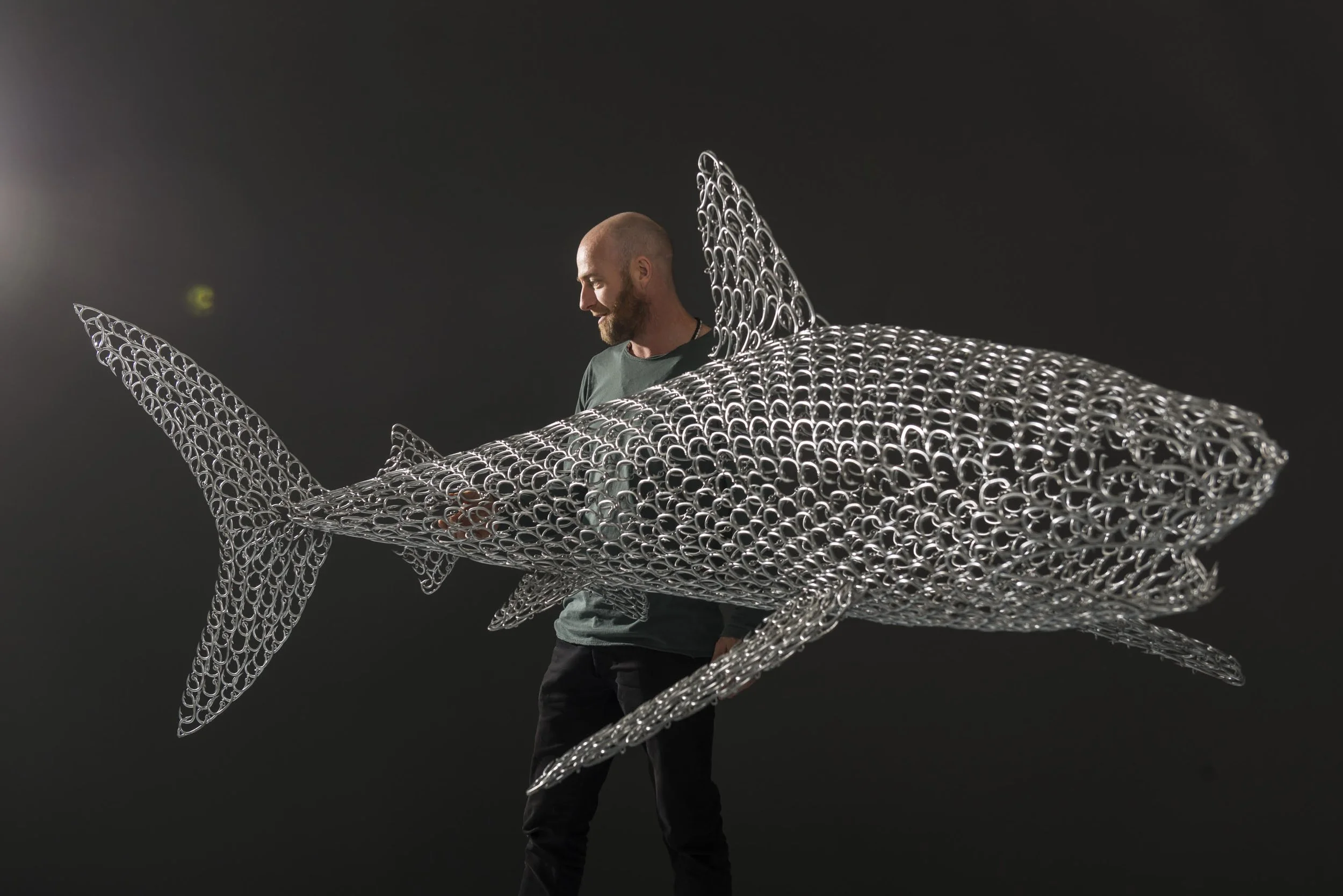
230 cm Mako Shark
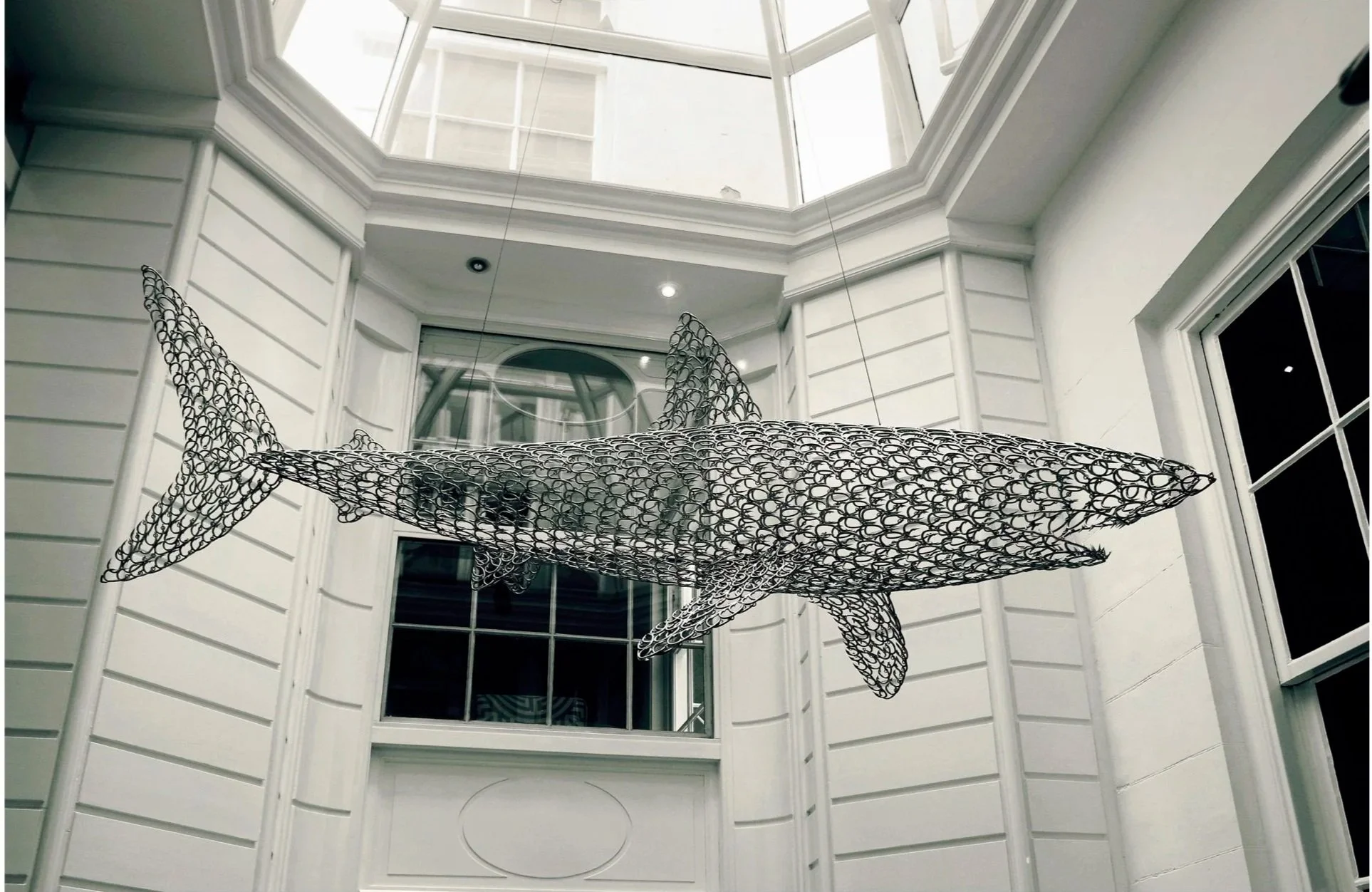
300 cm Mako Shark

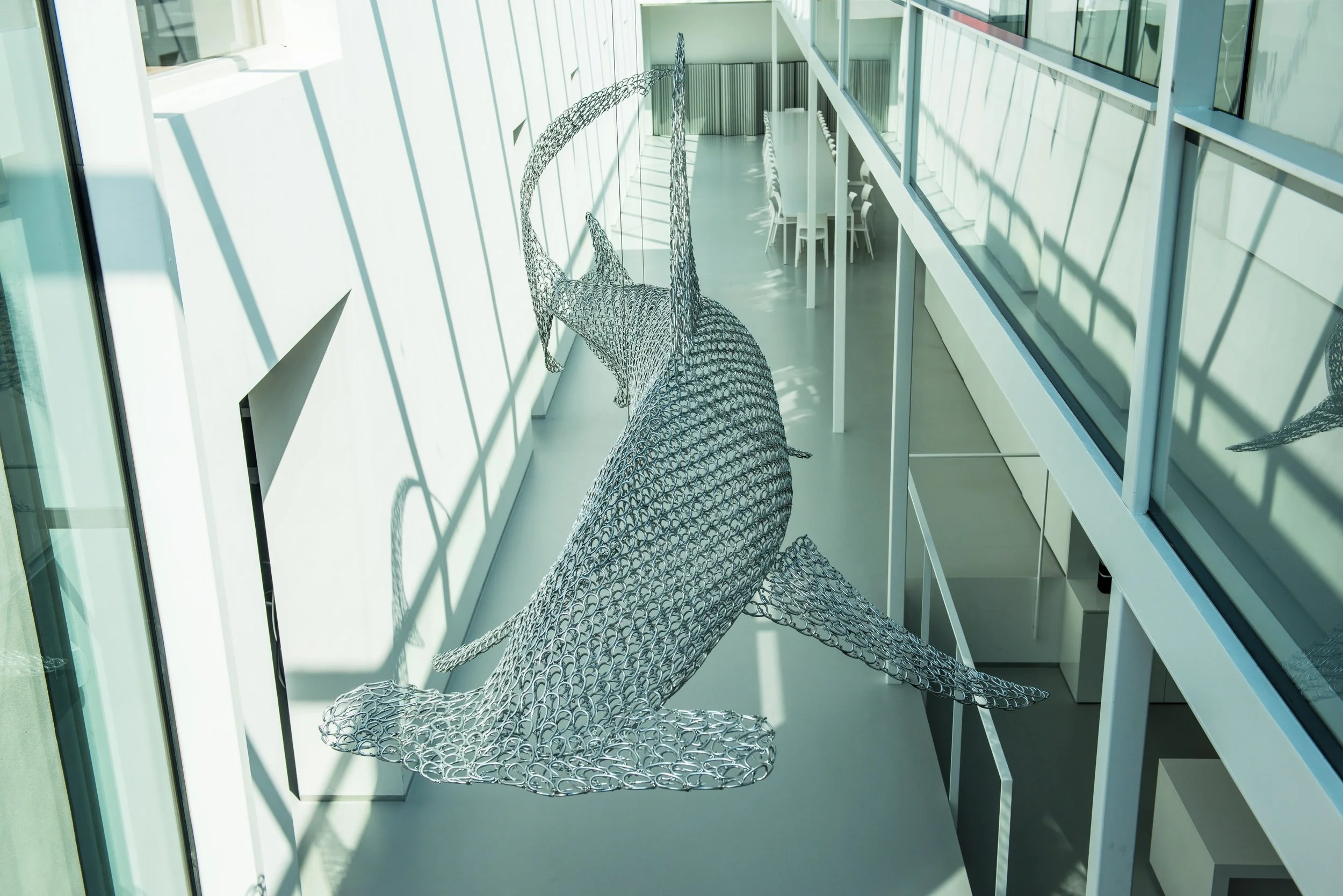
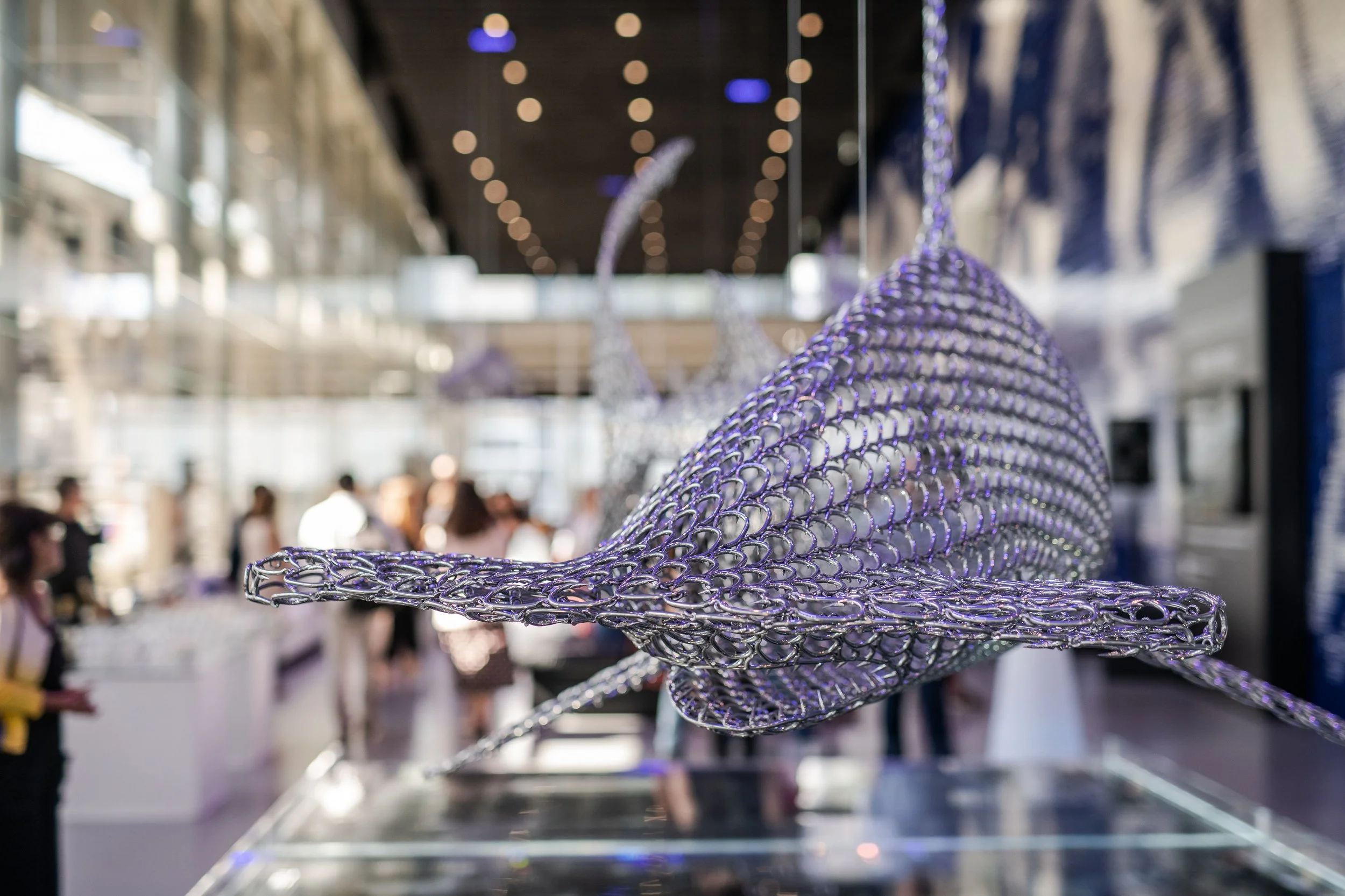
The great hammerhead shark is the largest of all nine hammerhead species and one of the most visually striking predators in the ocean. With its massive body, distinctive hammer-shaped head, and beautifully elongated, sickle-shaped fins, it appears almost otherworldly — an alien presence moving through the sea.
In this sculpture, the razor-sharp teeth and angular form of the hammerhead are accentuated by stainless steel fishhooks, each one echoing the danger and precision of the animal itself. What is inherently deadly is transformed into something unexpectedly graceful. The body curves subtly, with the tail gently bending, giving the impression of motion frozen mid-swim.
The great hammerhead holds personal significance for Vincent Mock and is one of his favorite shark species. Despite its power and size, it is extremely vulnerable to overfishing. Low population numbers, slow reproduction, and long generation times make recovery difficult once populations decline. Conservation is further complicated by the fact that many fisheries do not distinguish great hammerheads from other hammerhead species in their reported catches.
The sculpture exists in two monumental sizes — 380 cm and 500 cm — reinforcing both the physical presence of the animal and the urgency of its protection. Through this work, admiration and concern come together, turning a formidable predator into a reminder of how fragile even the most powerful marine species can be.
The Great Hammerhead Shark Fleet
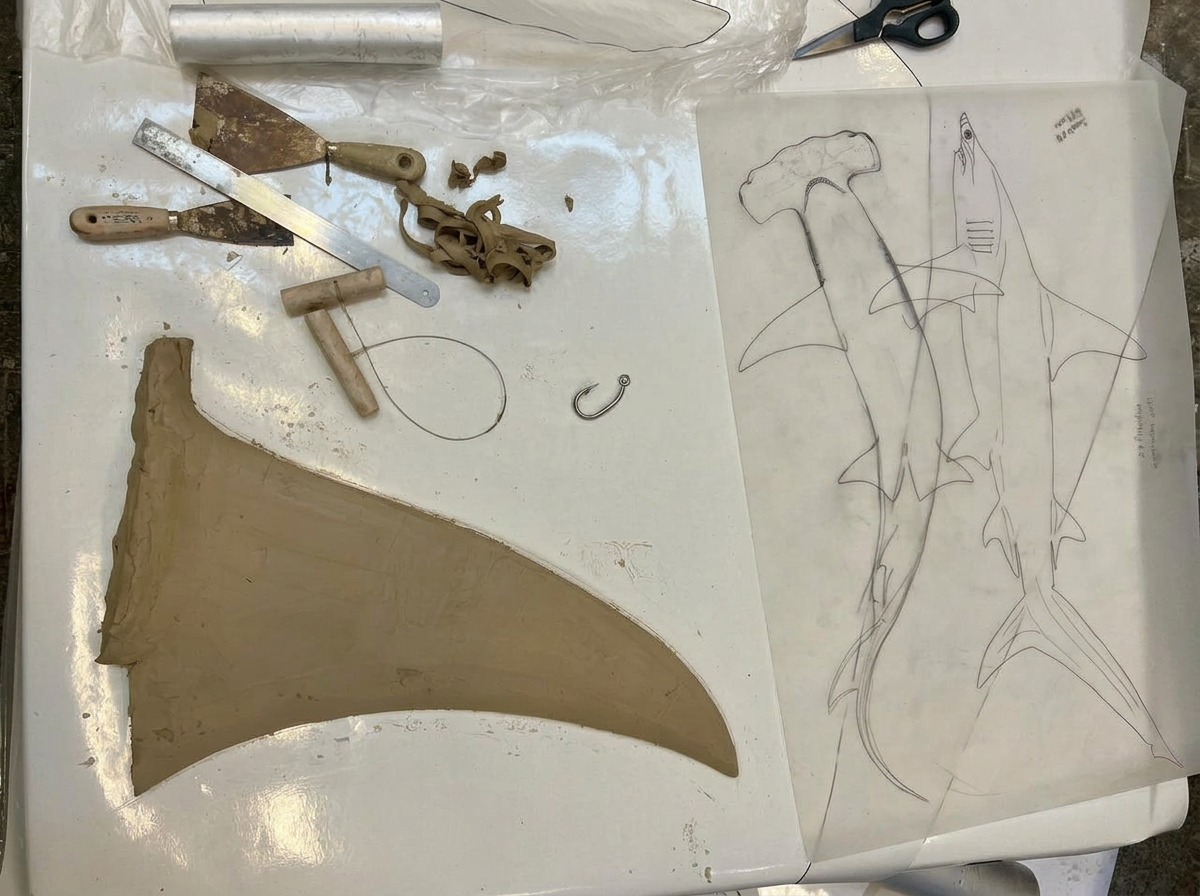
[SOLD OUT] 350 cm Great Hammerhead
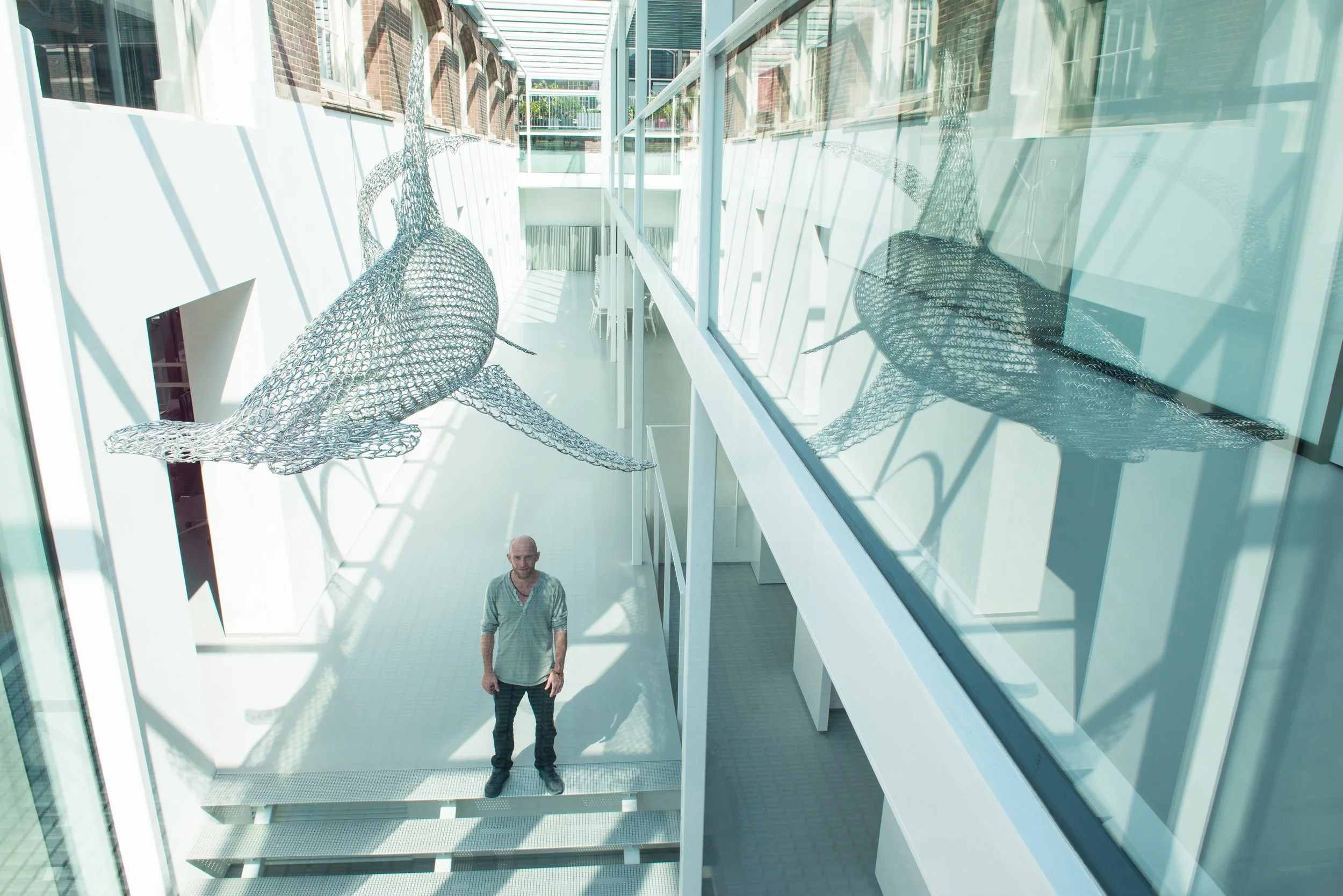
380 cm Great Hammerhead
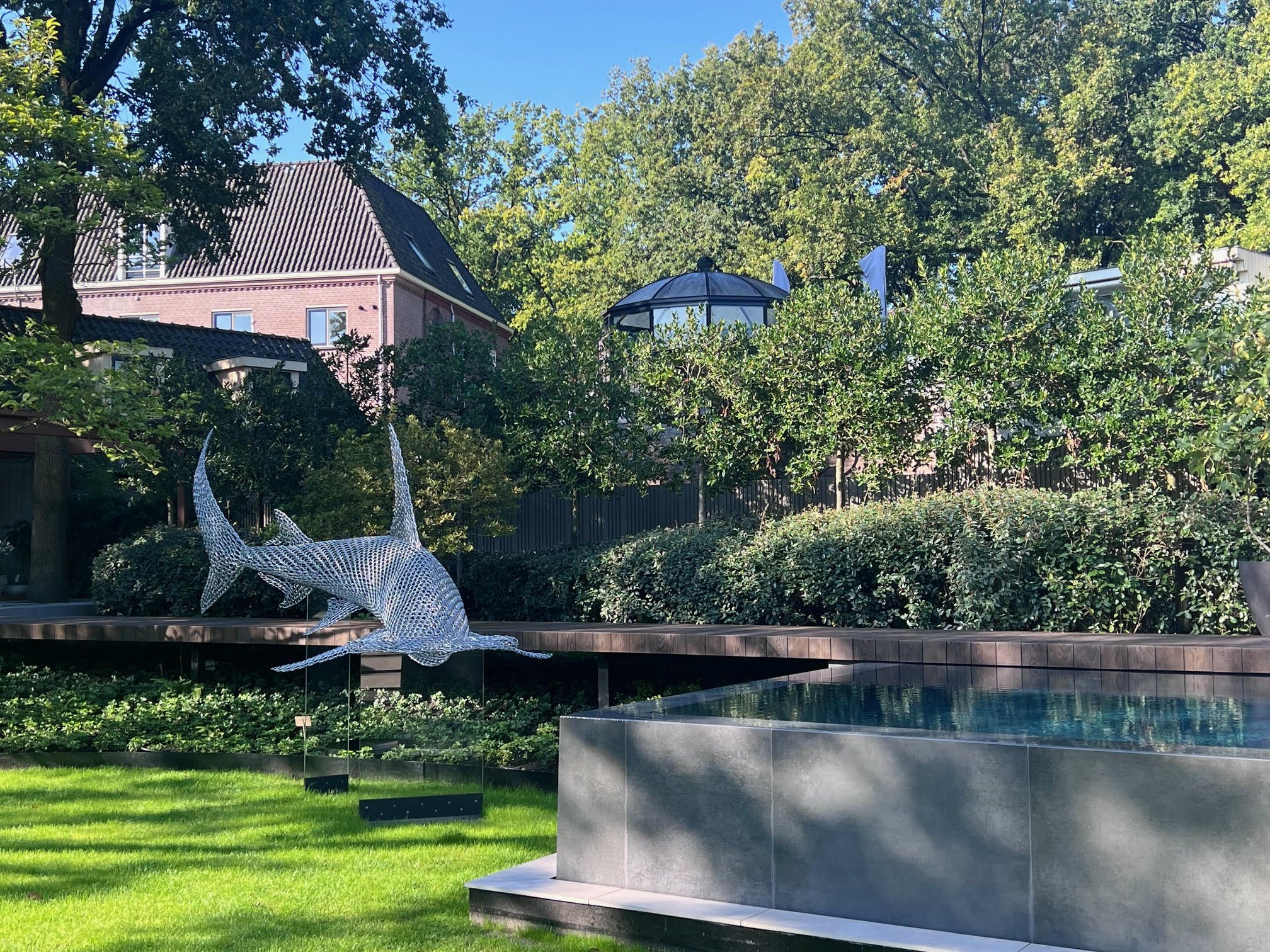
500 cm Great Hammerhead
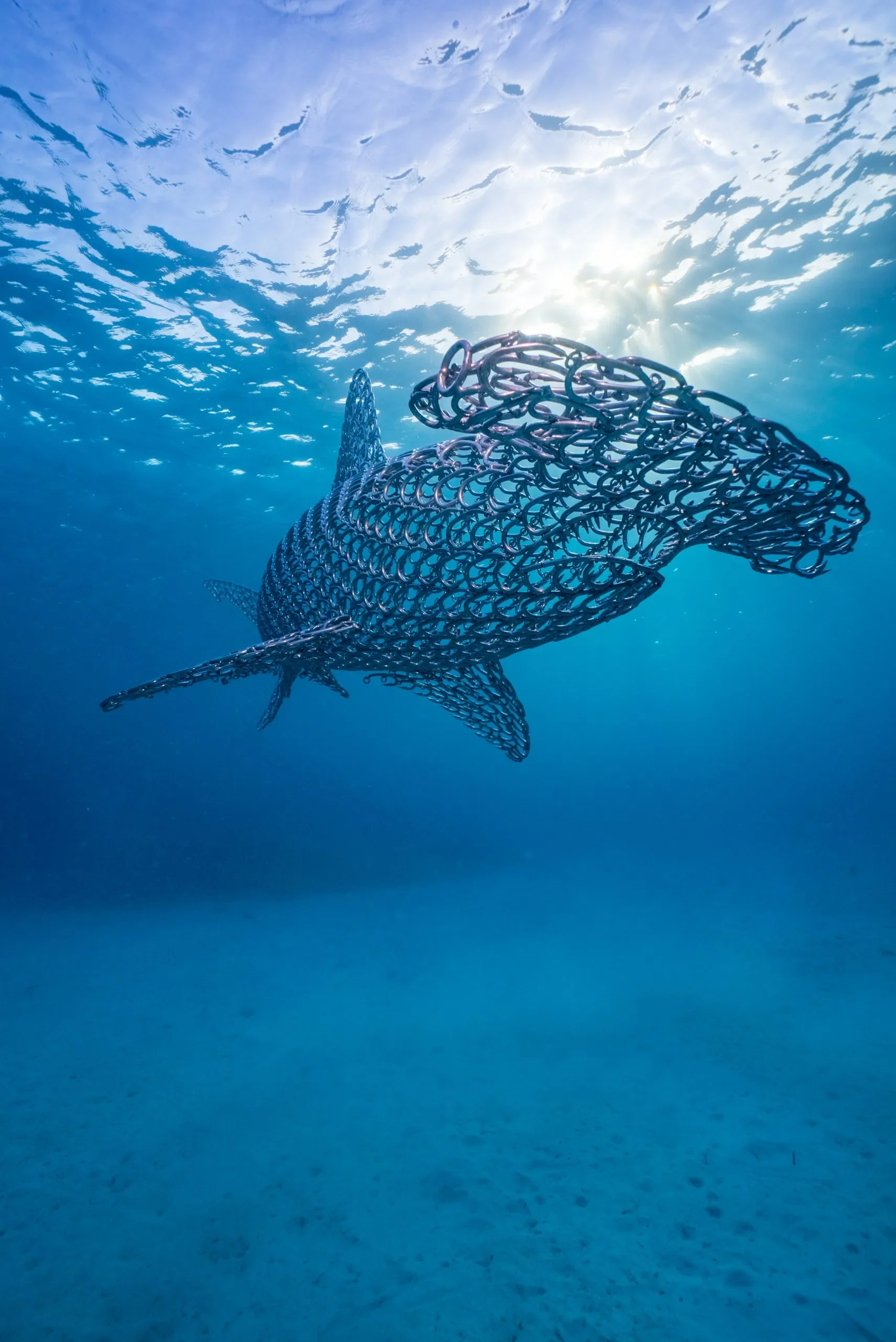
Scalloped hammerhead sharks have been a source of inspiration from the very beginning of Vincent Mock’s artistic journey. The idea for the Hooked On Life series originated after watching a documentary filmed by Sea Shepherd in the Galápagos Marine Park, where miles of illegally placed longline fishing gear were hauled from protected waters.
Caught on the hooks were not only tuna, but also sharks and albatrosses. The images revealed a chaotic and devastating reality: endless lines of steel hooks piled across the decks of conservation ships, each one a trace of unintended capture and ecological damage. From these scenes, the idea of transforming fishhooks into sculpture was born.
The scalloped hammerhead, known for its distinctive curved head and schooling behavior, became a natural focal point for this concept. In the sculpture, fishhooks are reassembled into a powerful yet fragile form, reflecting the tension between beauty and destruction, movement and entrapment.
This work exists in several variations: a 120 cm version (aka the smooth hammerhead) and three distinct interpretations at 230 cm. Together, they mark the moment where observation turned into action, and where art became a medium to address marine conservation, responsibility, and the hidden cost of industrial fishing.
The Scalloped Hammerhead Shark Fleet
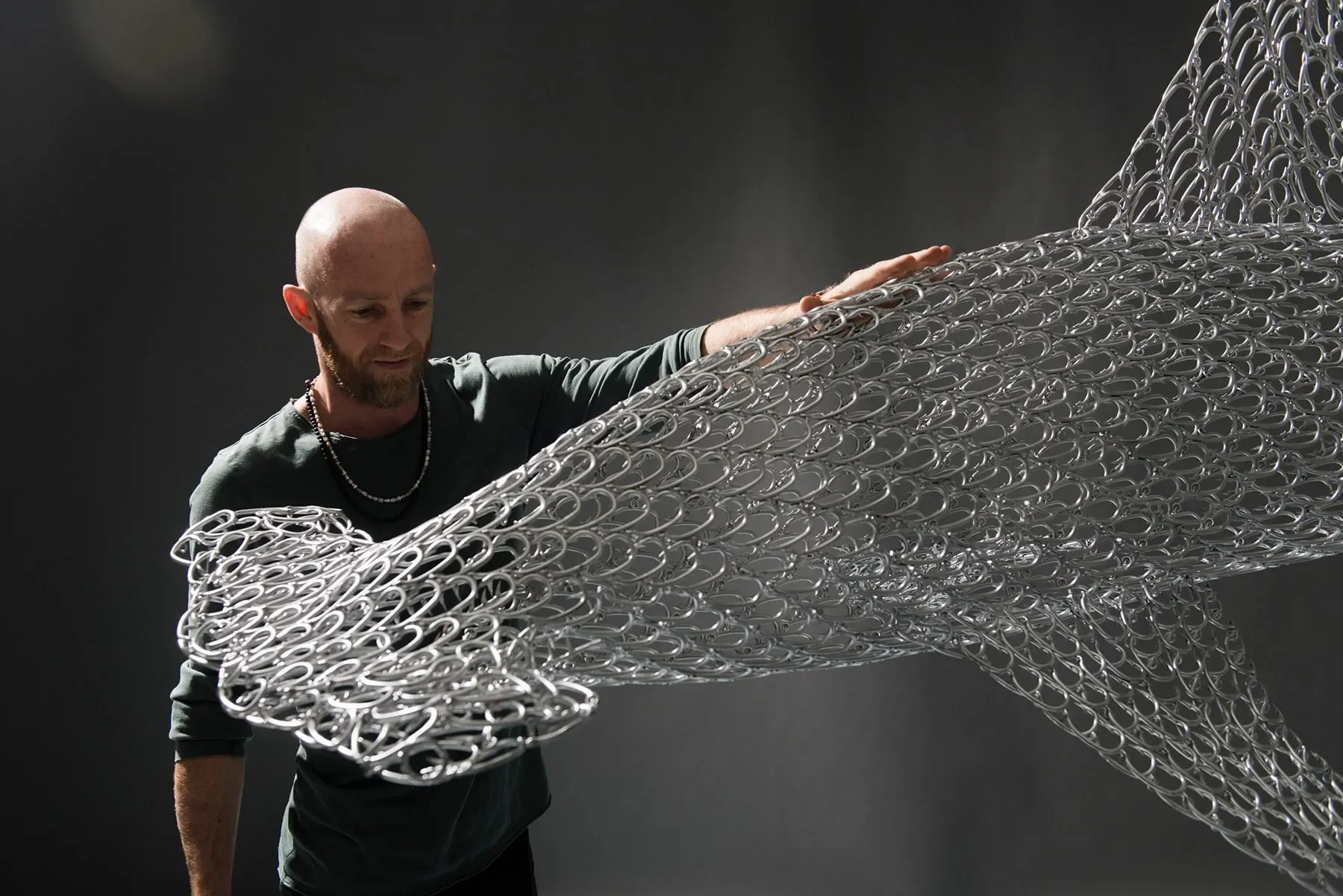
120 cm Smooth Hammerhead
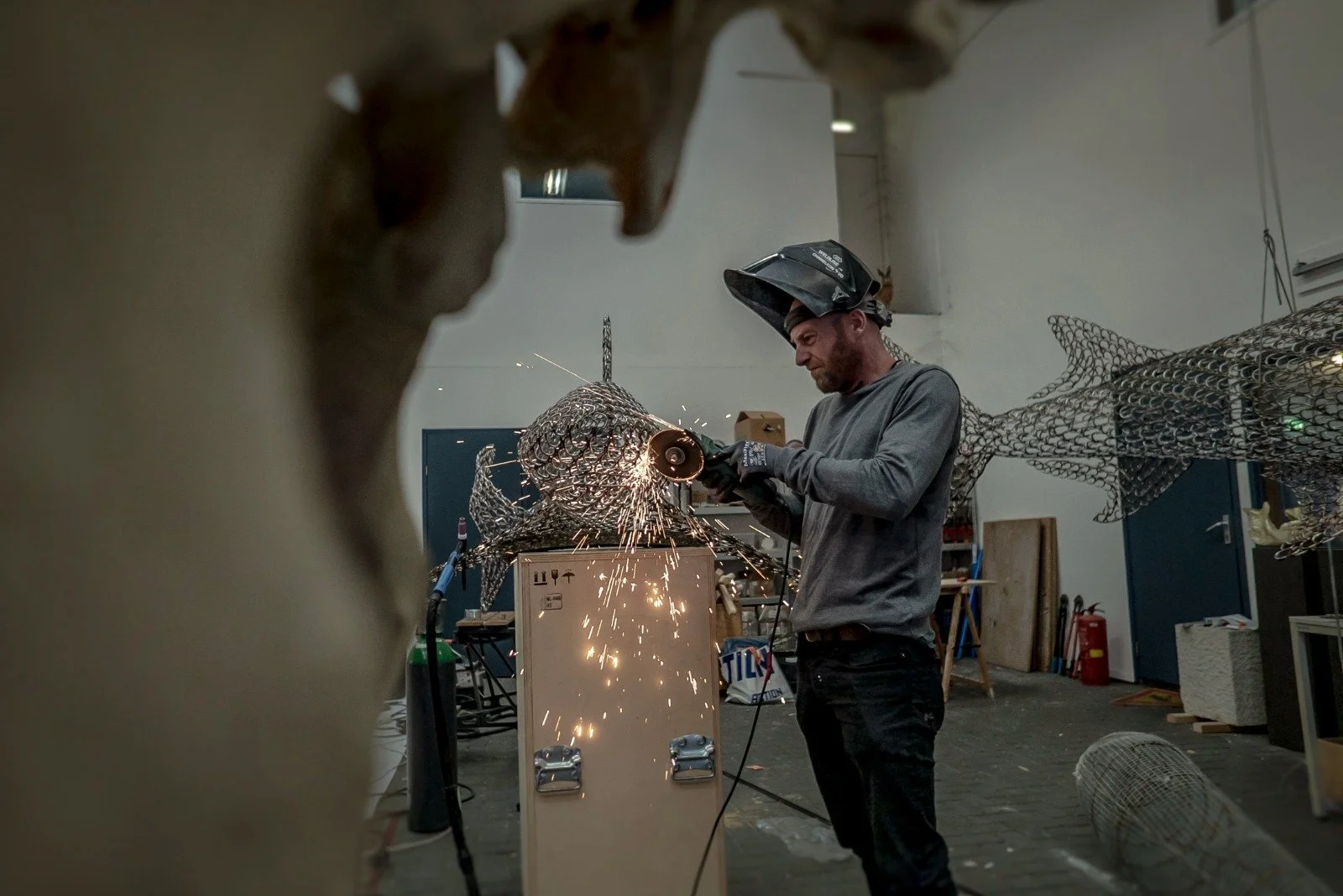
230 cm Scalloped Hammerhead
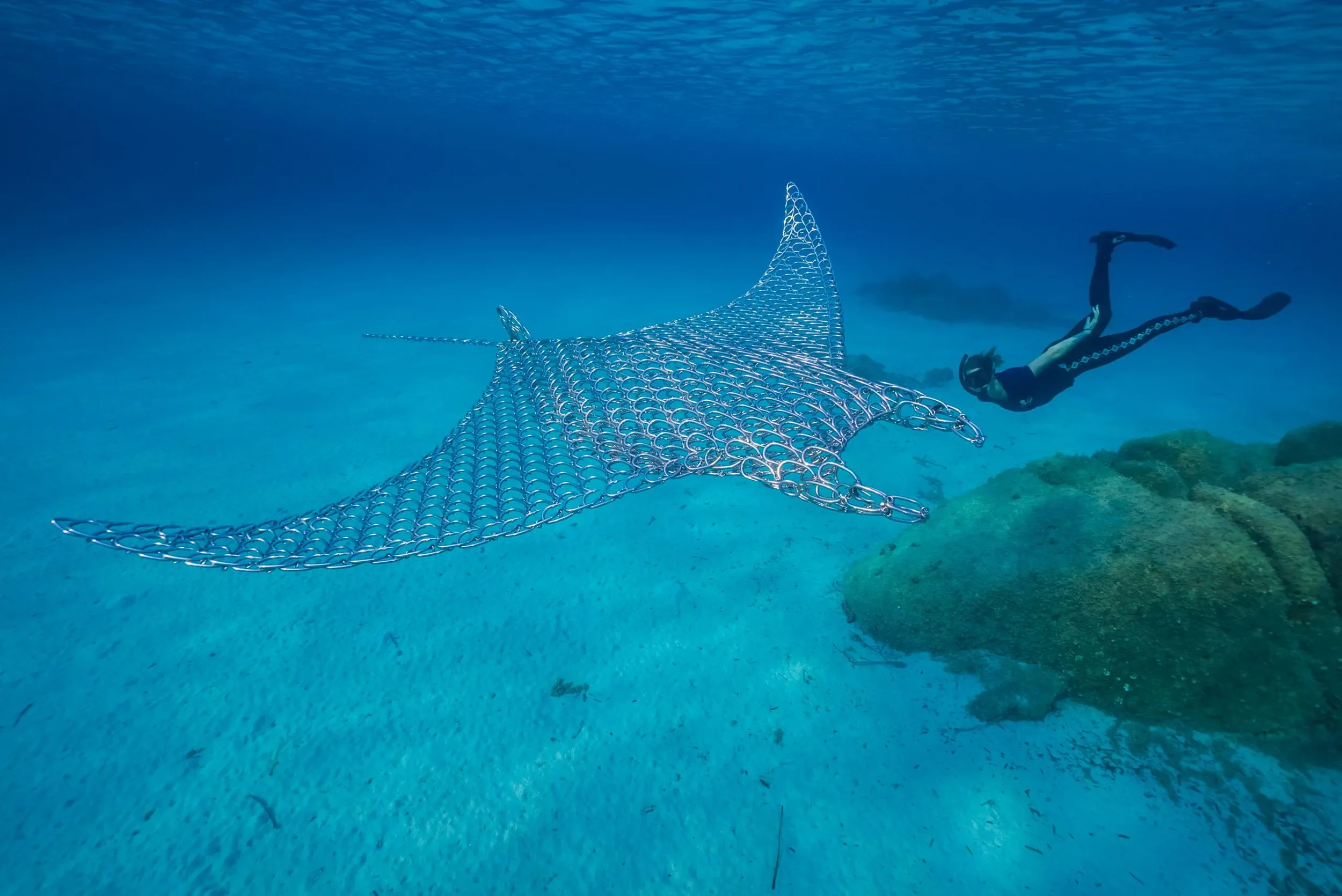
Manta rays are among the most breathtaking creatures in the ocean. With their vast wingspans and effortless movement, they appear almost weightless, gliding through the water like organic spacecraft. Intelligent, gentle, and curious, mantas are filter feeders that migrate across oceans in search of plankton-rich waters and suitable mating grounds.
Despite their ecological importance, manta species are in critical condition. As they migrate through international waters, they face increasing threats from overfishing, entanglement in fishing gear, and pollution. In recent decades, these pressures have significantly increased the risk of their extinction.
These sculptural works are an ode to what we can still cherish of the natural wonders of our blue planet. By transforming stainless steel fishhooks into flowing, wing-like forms, the sculptures highlight both the beauty and vulnerability of manta rays. What appears light and graceful is constructed from materials that speak of danger and human impact.
The manta ray sculptures are designed to be experienced in open, luminous spaces such as auditoriums or beneath light ceilings. In these environments, their elegant silhouettes can be fully appreciated, inviting visitors to reflect on the path we choose as a dominant species and on the vital role oceans play in sustaining life on Earth.
The works exist in three sizes: 120 cm (Devil Ray); 230 cm & 475 cm (Reef Manta)
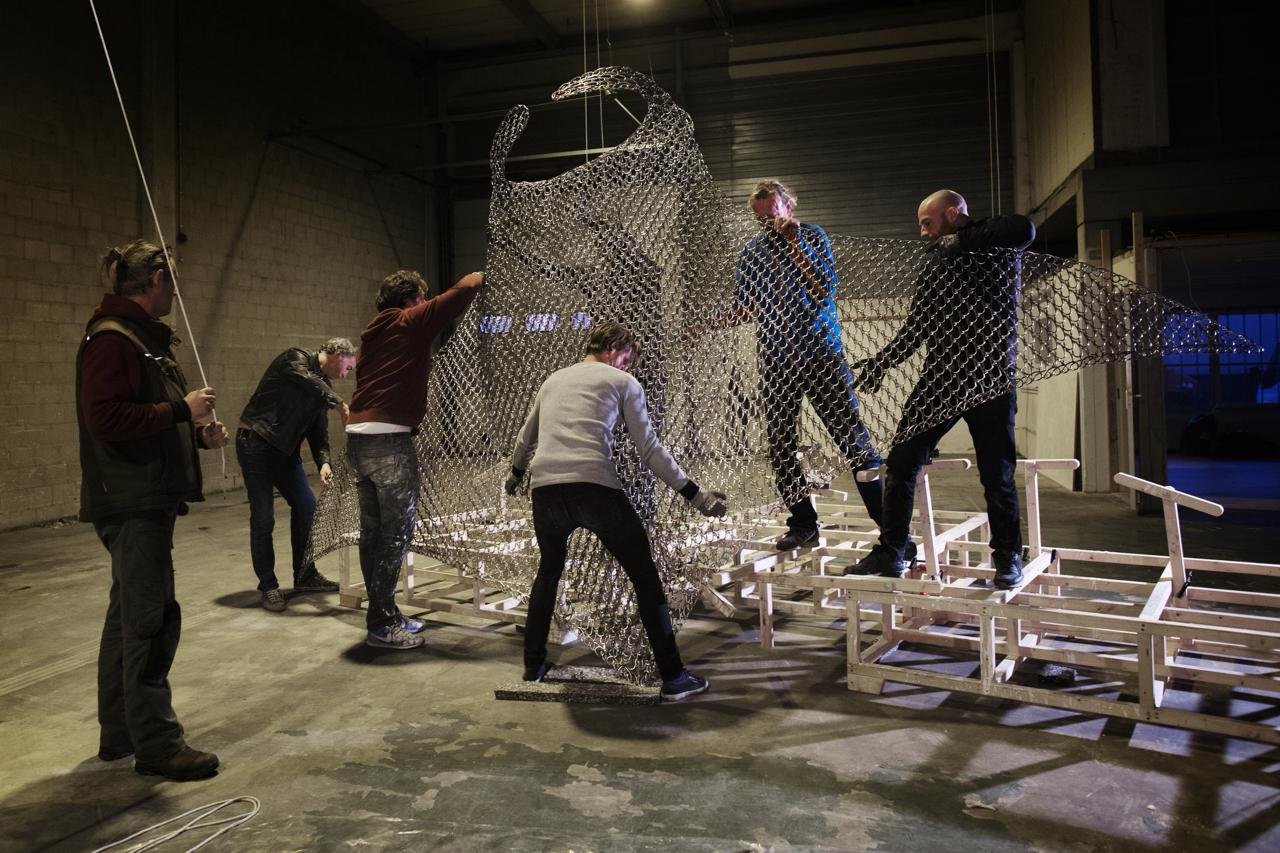
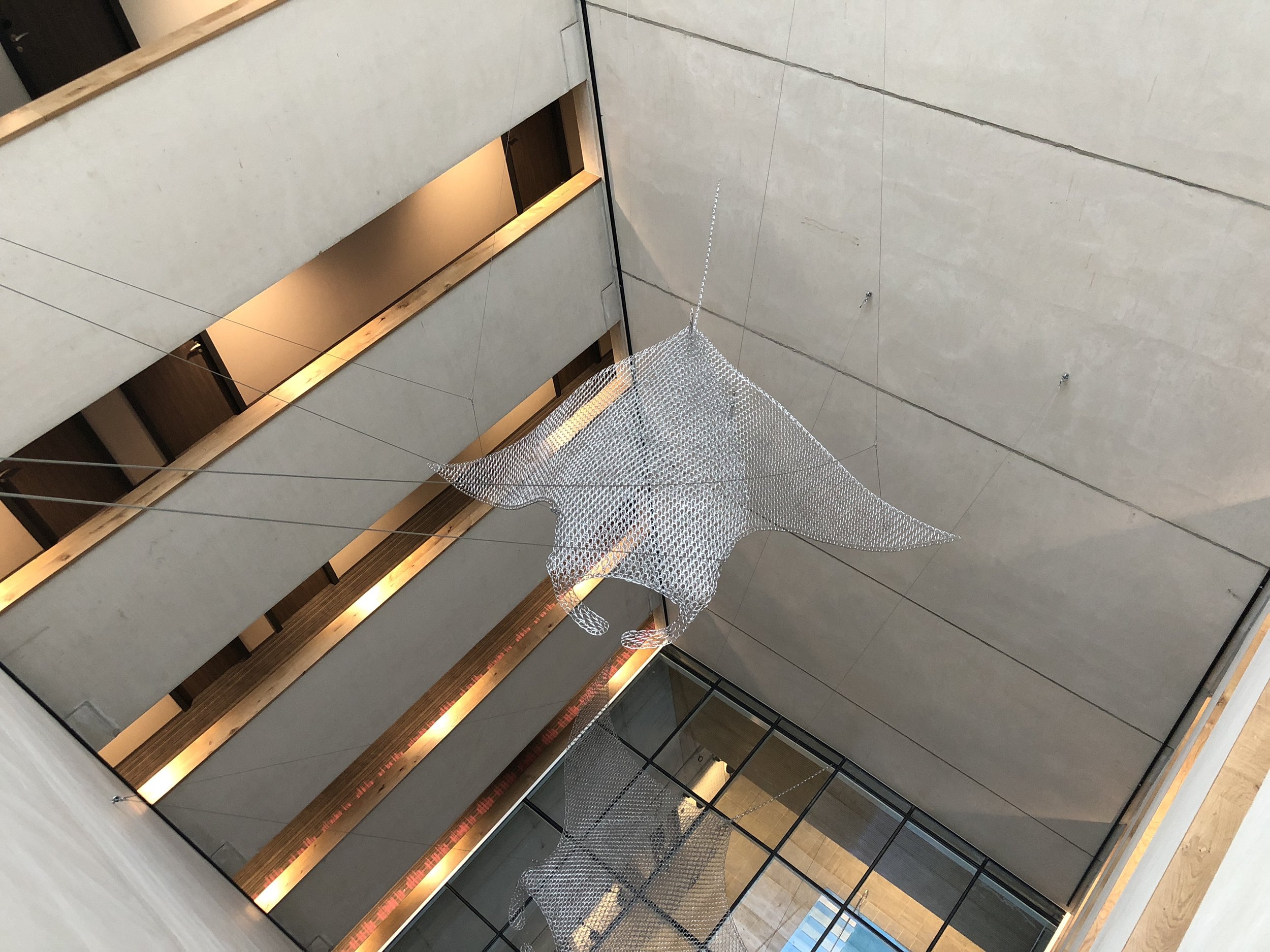
The Manta Ray Fleet
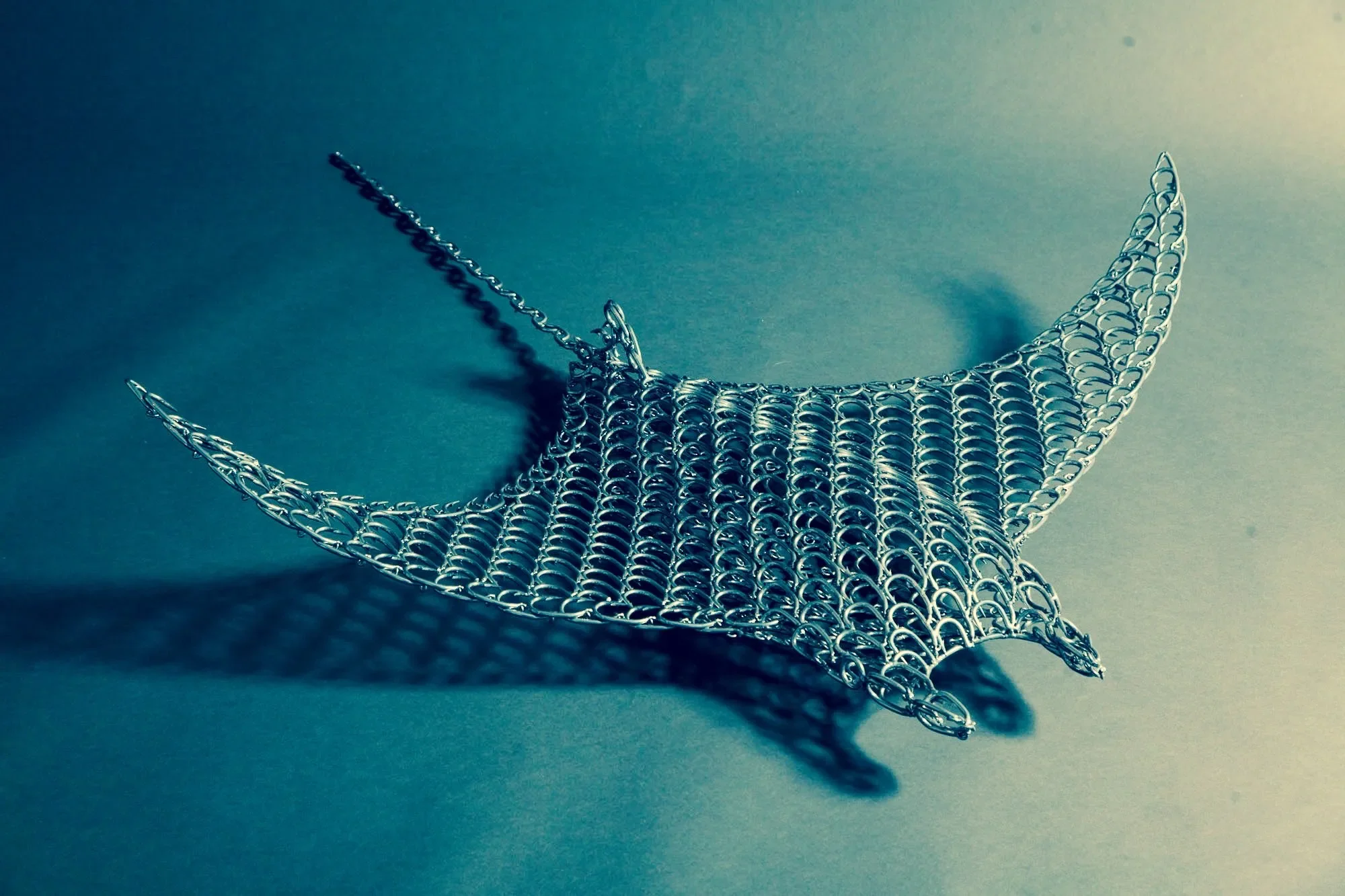
120 cm Devil Ray
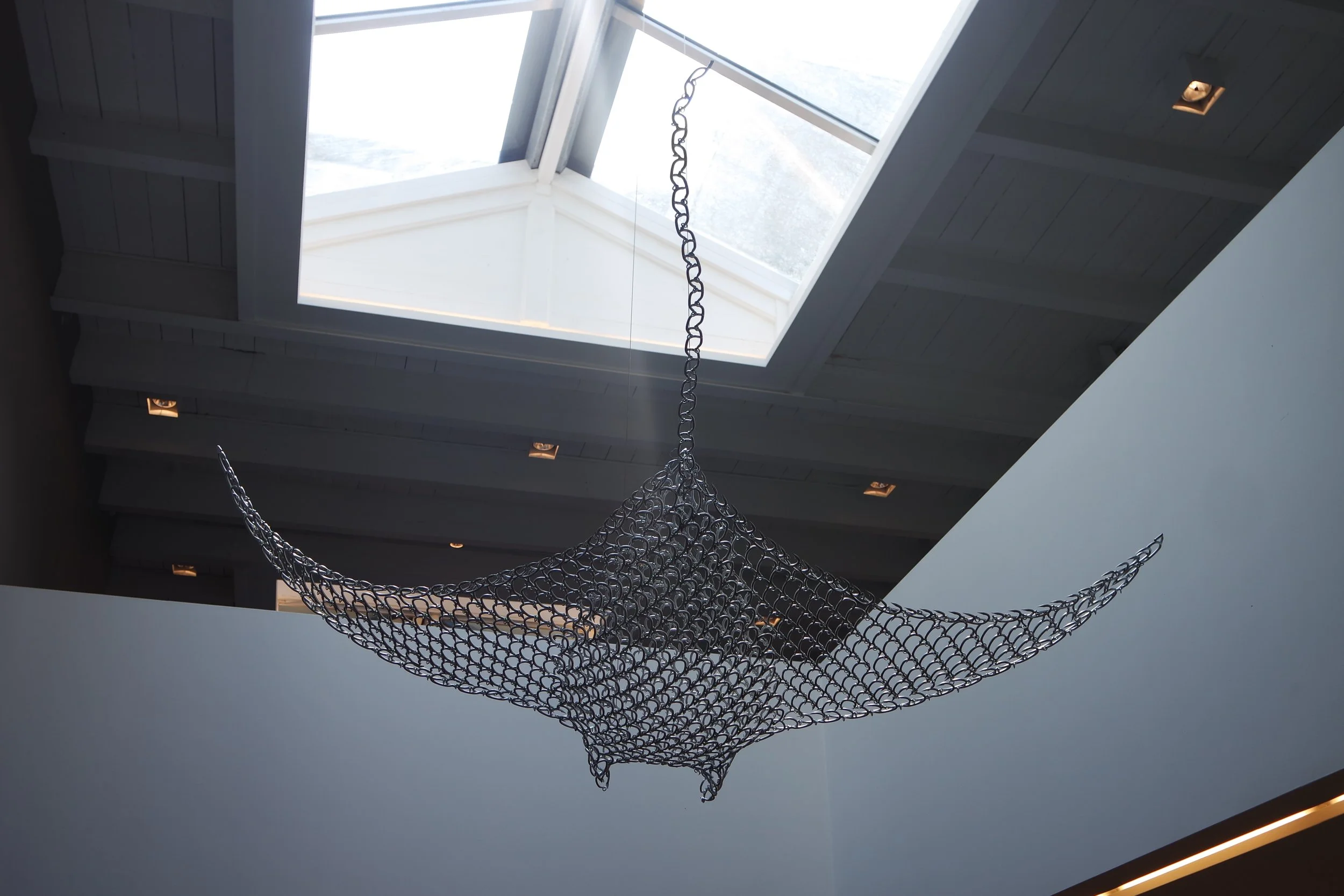
230 cm Manta Ray
475 cm Reef Manta

620 cm Giant Oceanic Manta Ray