OTHER
COLLECTIONS
Alongside his major sculptural collections, Vincent Mock has developed a broader body of experimental works that unfold as laboratories of thought rather than fixed series. Spanning multiple years and scales, these projects move fluidly between dioramas, animation, scientific structures, and speculative forms. They draw from biology, ecology, and consciousness research to ask how life organizes itself, endures across deep time, and produces meaning beyond human systems of value.
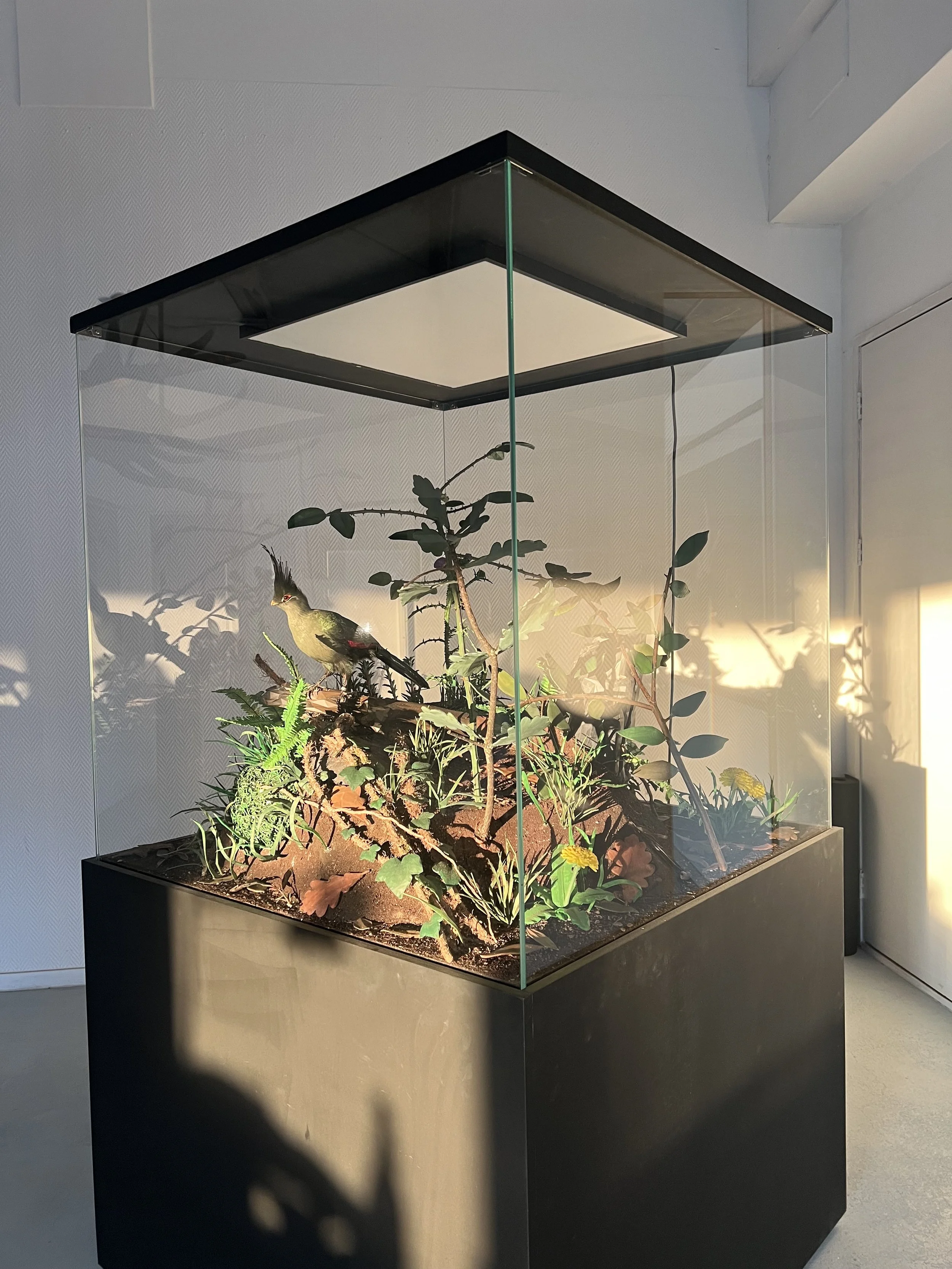
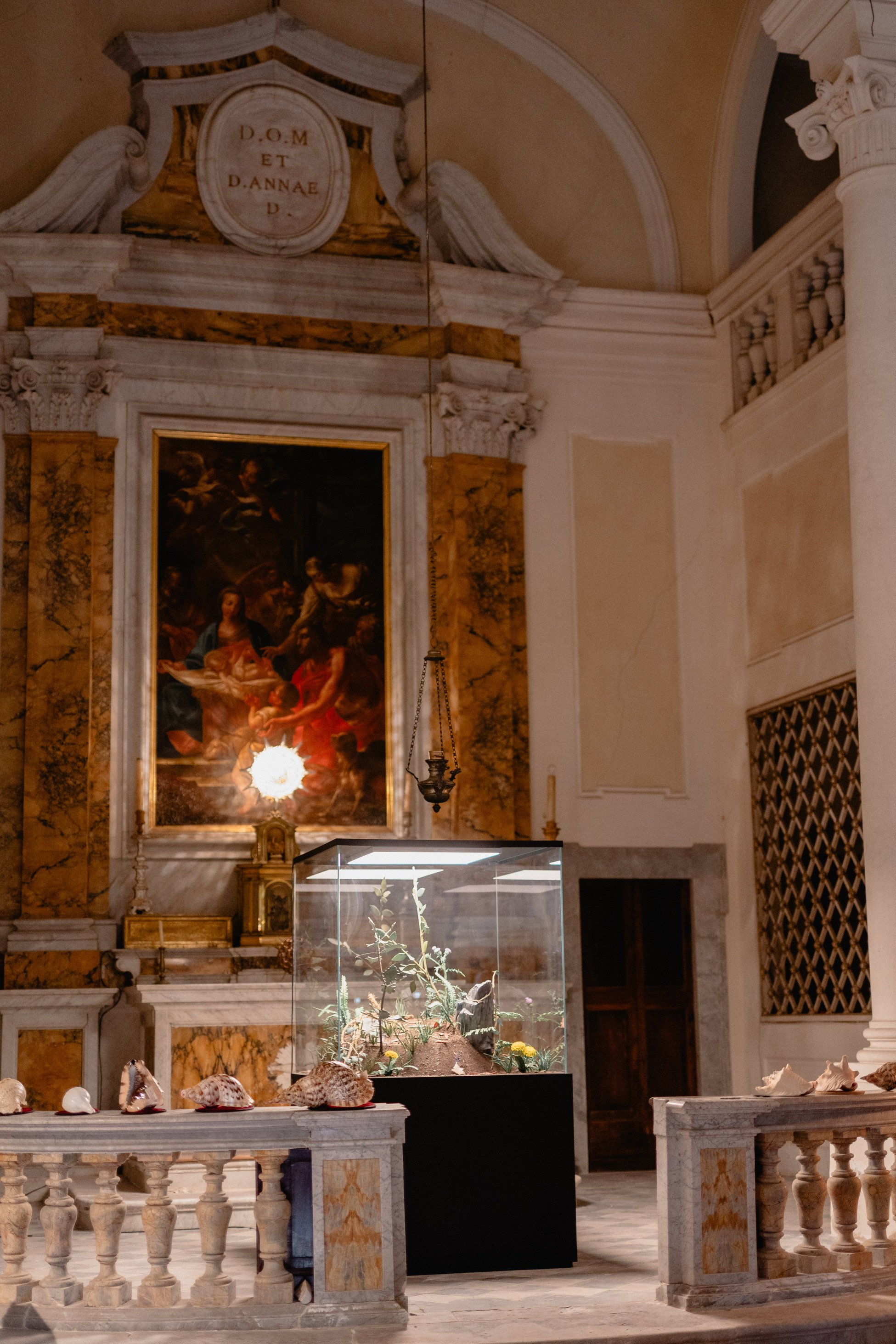
A recurring mode of experimentation within this practice is Mock’s work with Dioramas. These miniature, carefully constructed environments function as speculative ecosystems, combining 3D-printed elements, natural materials, and taxidermy to create scenes that feel both scientific and unsettlingly fictional. Neither pure documentation nor fantasy, the dioramas operate as controlled worlds where questions of dominance, coexistence, and human intervention can be examined at an intimate scale. They reflect Mock’s interest in how narratives about nature are constructed, staged, and consumed.
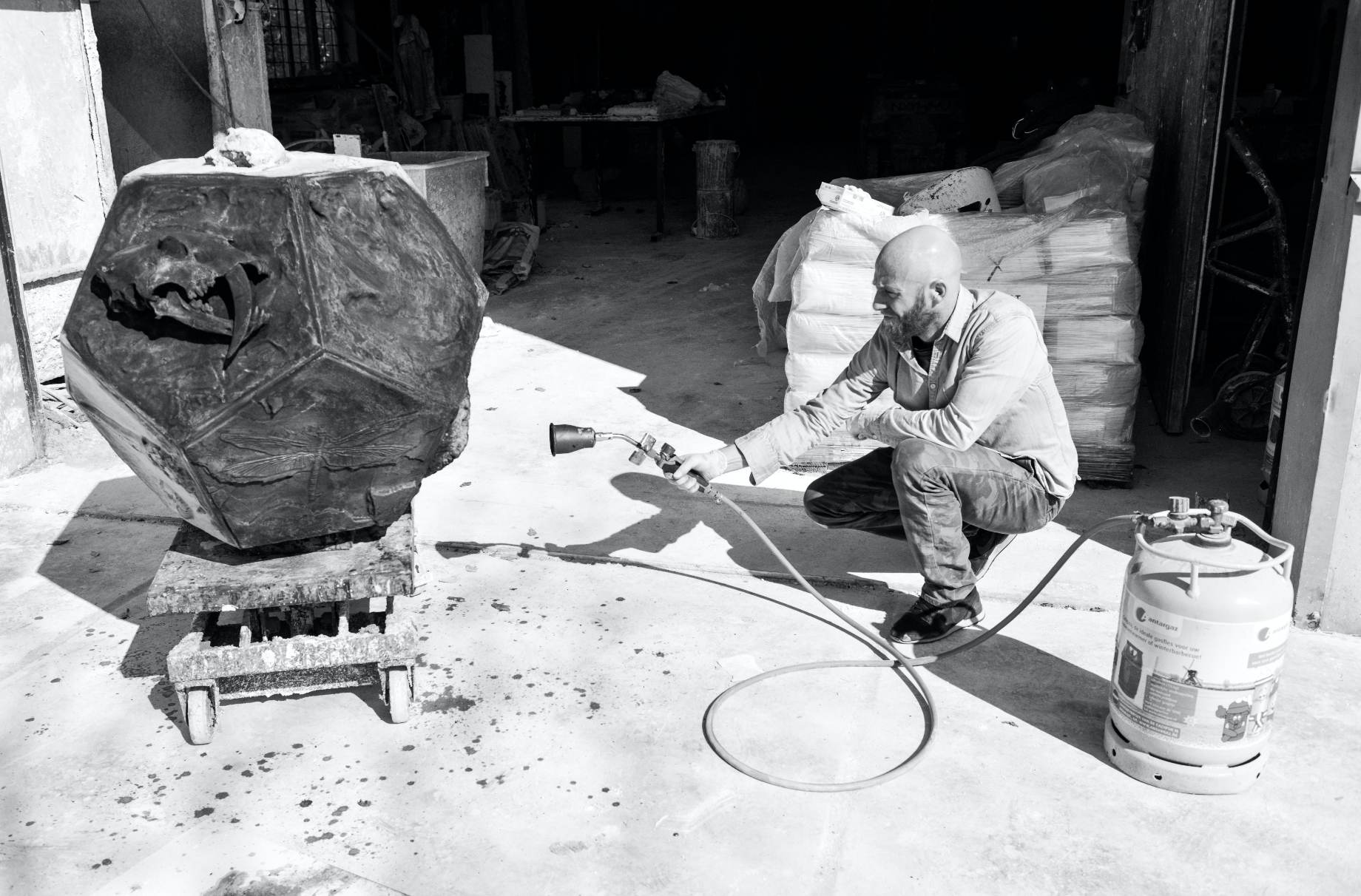
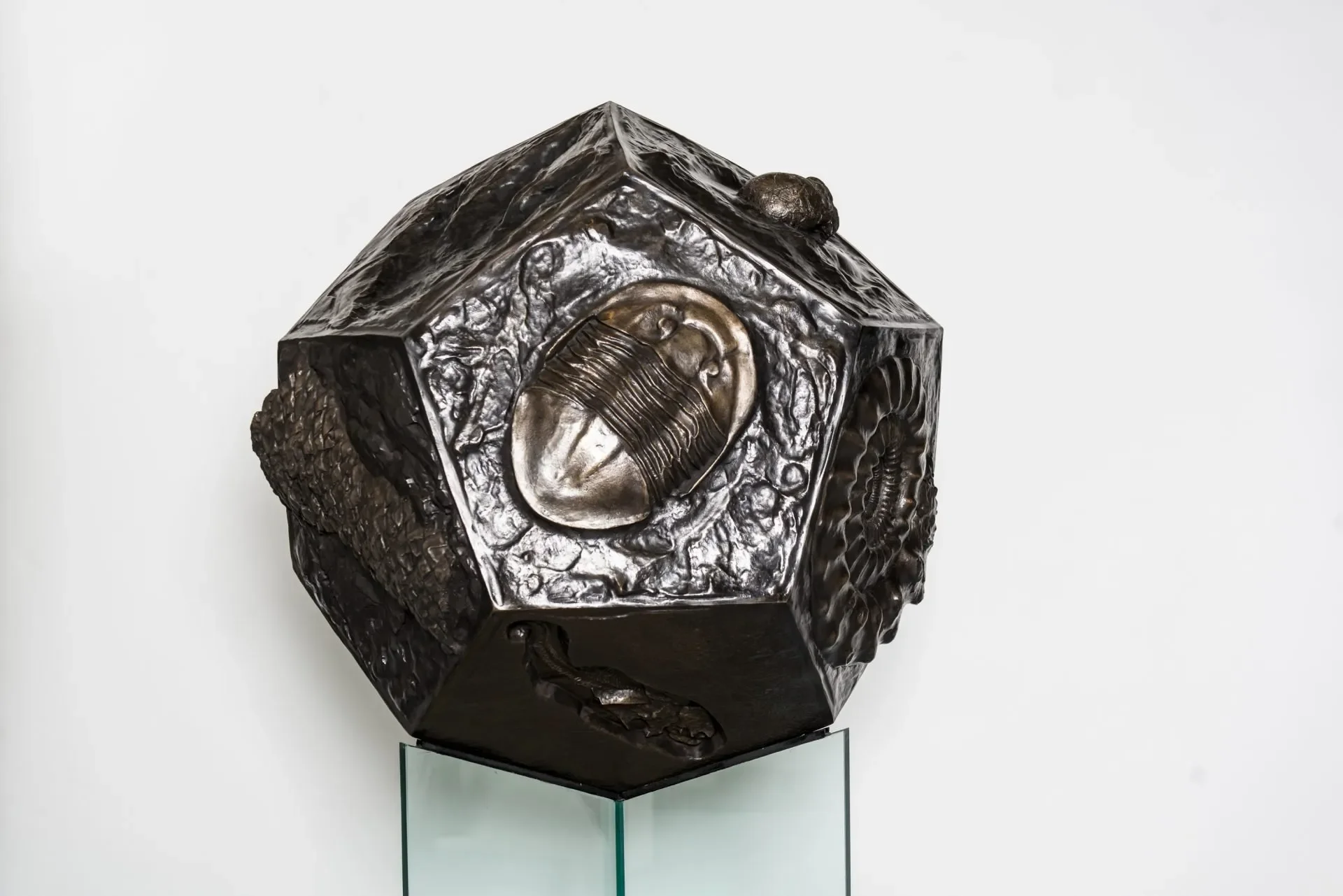
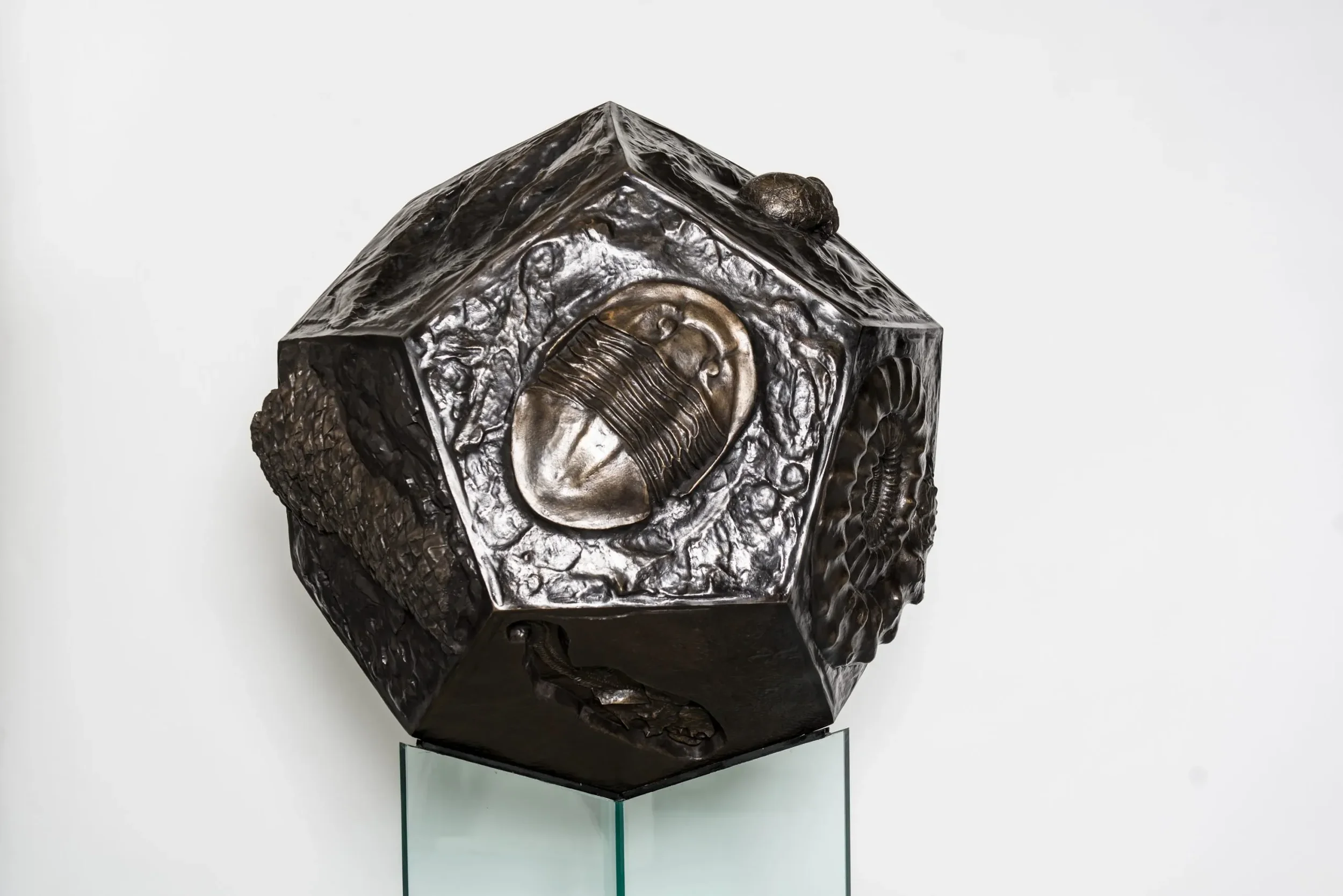
In Animated Earth, this inquiry expands outward to planetary scale. Fossil forms, arranged across a bronze dodecahedron, trace evolutionary milestones from the earliest organisms to human emergence, presenting the planet as a living body shaped by chance, extinction, and resilience. The work functions both as scientific cartography and philosophical object, reflecting on evolution as an ongoing, unfinished process.
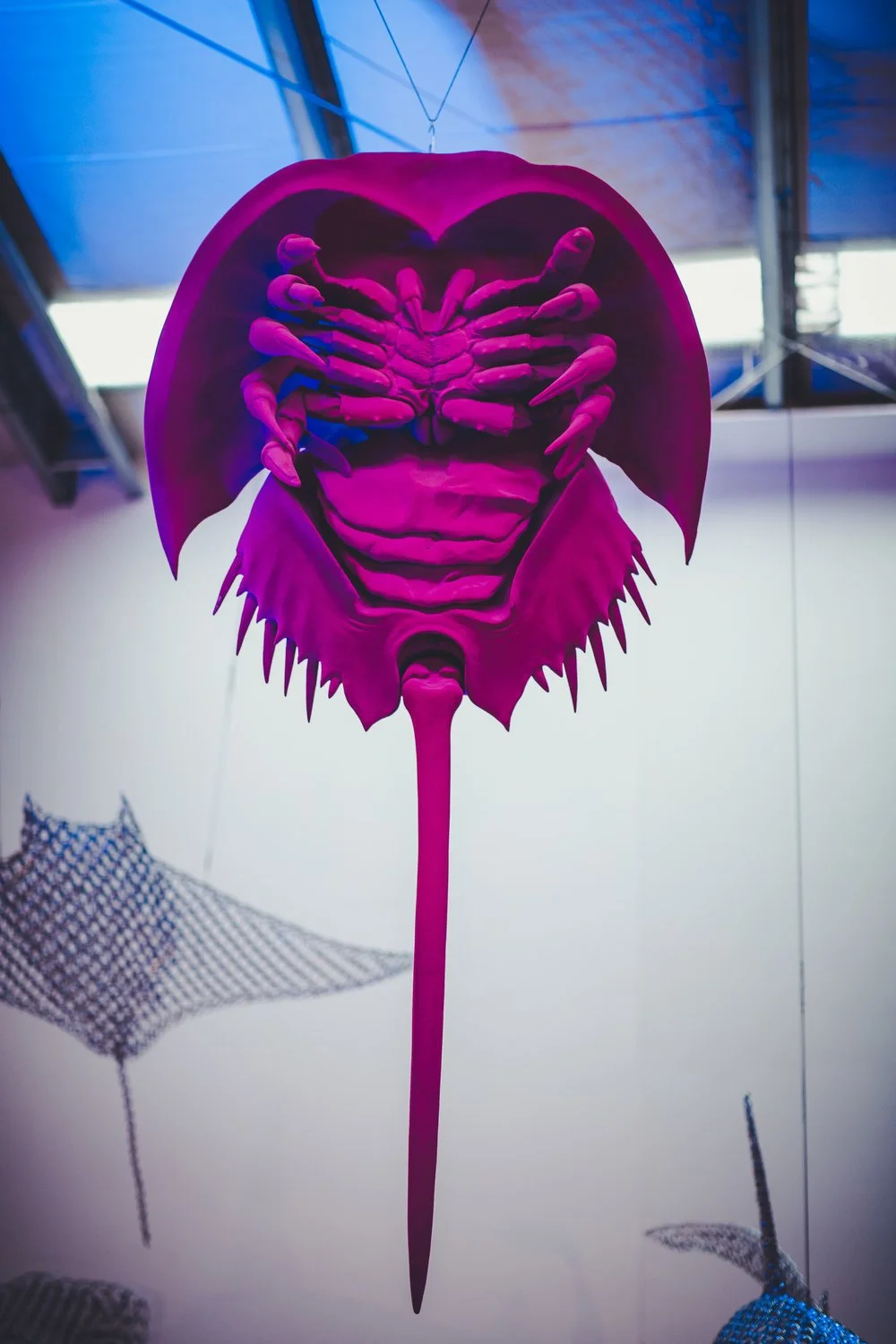
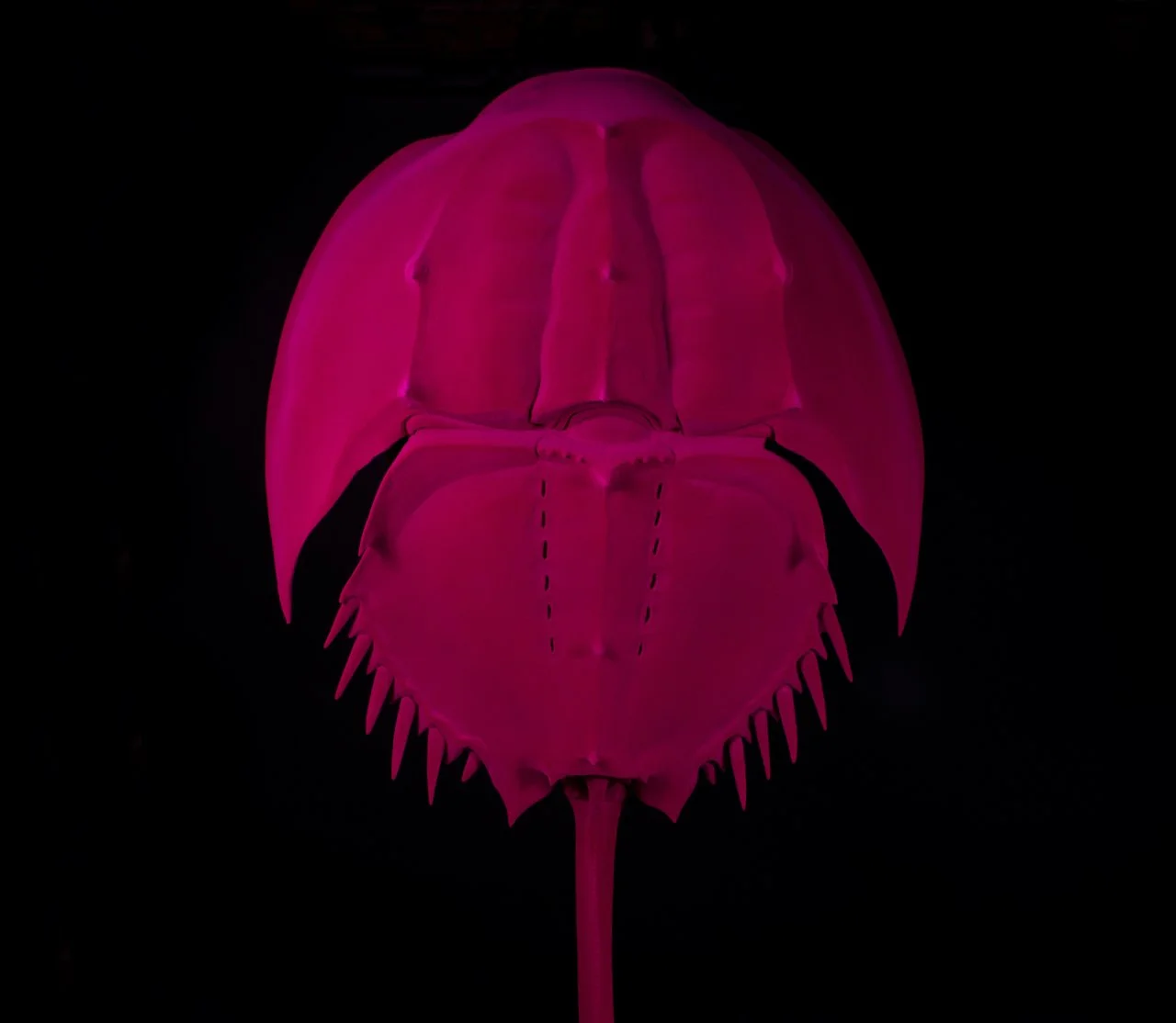
The Horseshoe Crab turns to one of Earth’s oldest surviving species, a creature that has outlived multiple mass extinctions yet now faces human-driven threats. By reimagining this ancient marine form through meticulous sculptural craft, the work becomes a meditation on endurance and fragility, pointing to the tension between survival and exploitation within contemporary ecological systems.
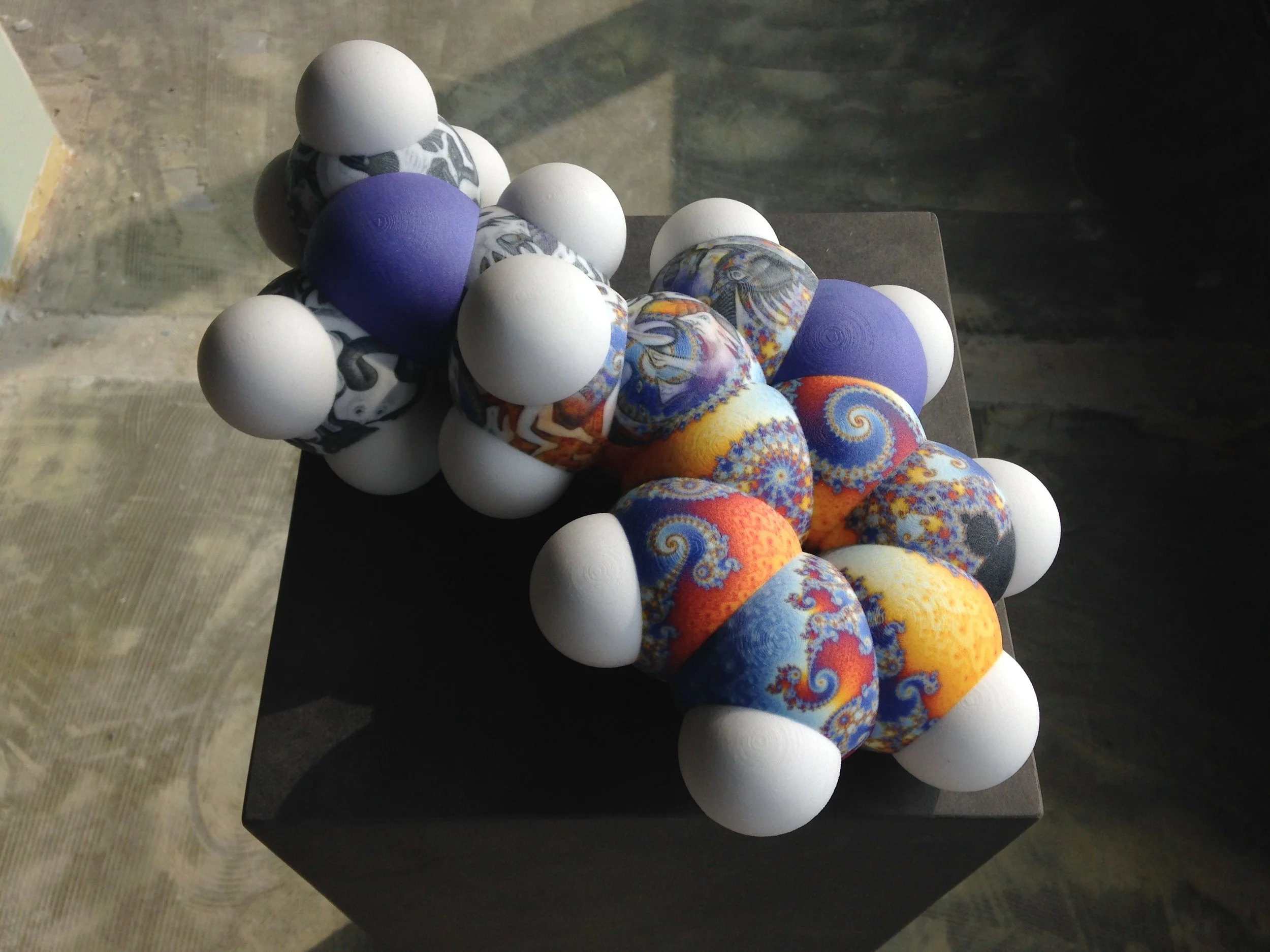
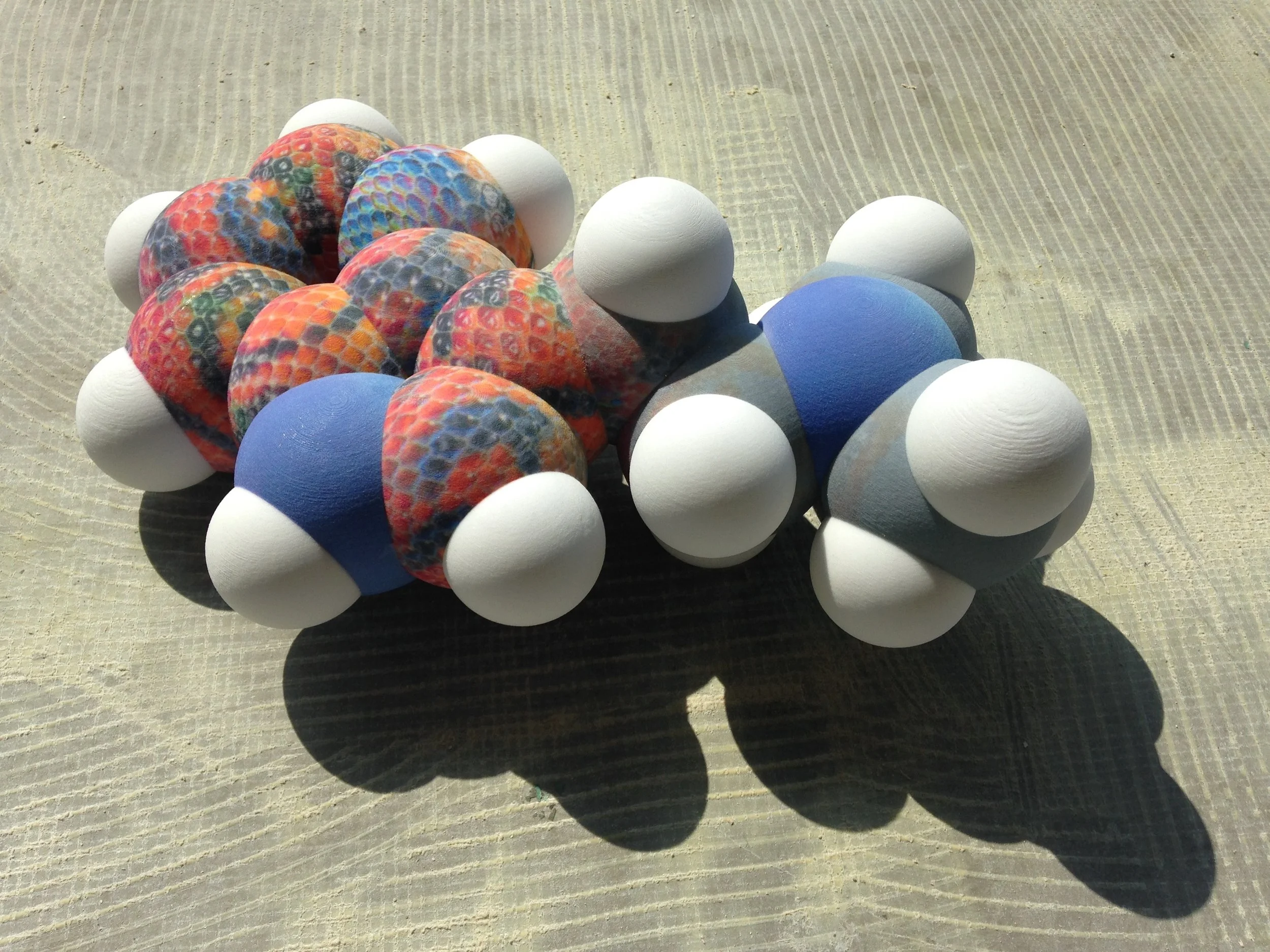
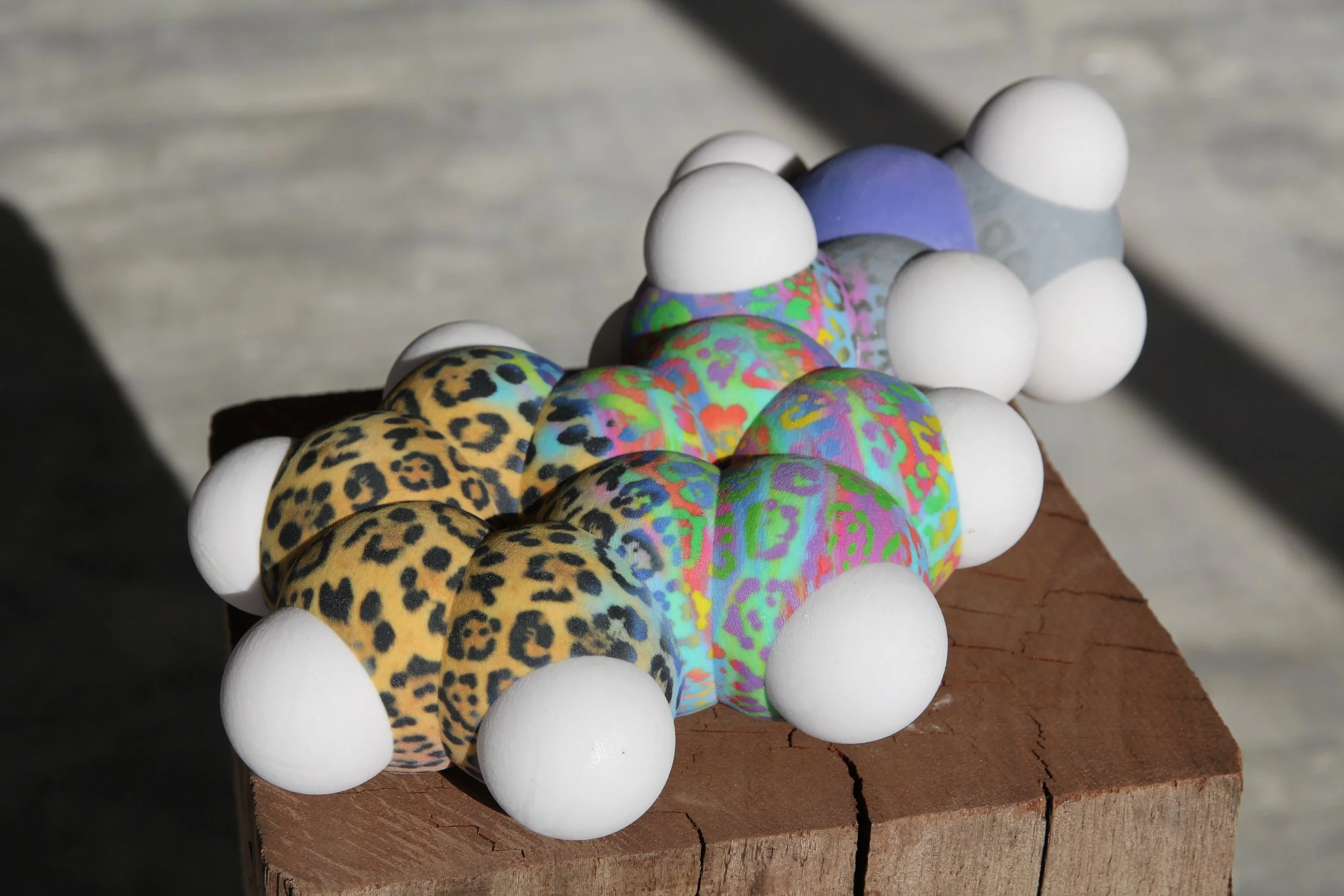
With Spirit Molecule, Mock shifts scale once more, enlarging the molecular structure of DMT into a sculptural form that bridges chemistry and metaphysics. Referencing both scientific research and shamanic traditions, the work explores consciousness as a natural phenomenon, embedded in biology yet capable of radically altering perception, identity, and experience.
Together, these works form a connective layer within Mock’s practice. Moving between the microscopic and the planetary, the ancient and the speculative, the material and the immaterial, they reveal an ongoing investigation into life as an interconnected system and humanity’s evolving position within it.